
- Why MBA (Business Analytics) Will Be in High Demand in 2026
- 1. Massive Growth of Artificial Intelligence
- 2. Exponential Data Generation
- 3. Rising Need for Data-Driven Decision-Making
- 4. Shortage of Analytics Talent
- What Makes the MBA in Business Analytics 2026 Curriculum Different?
- Core Subjects
- Future-Ready Additions in 2026
- Skills You Will Master by 2026
- Technical Skills
- Managerial Skills
- Career Opportunities After MBA (Business Analytics) in 2026
- Top Job Roles
- Emerging roles in 2026
- Salary Expectations in 2026
- Average Salary Range (Global Estimate)
- Top Industries Hiring MBA Business Analytics Graduates in 2026
- Why Choose an MBA in Business Analytics in 2026?
- 1. What is an MBA (Business Analytics) in 2026?
- 2. Is MBA (Business Analytics) a good career option in 2026?
- 3. What skills do I need for an MBA (Business Analytics) in 2026?
- 4. Which industries hire MBA (Business Analytics) graduates in 2026?
- 5. What are the career options after MBA (Business Analytics) in 2026?
- 6. What is the average salary after MBA (Business Analytics) in 2026?
- 7. Do I need a technical background for an MBA (Business Analytics) in 2026?
- 8. What tools and technologies will I learn in MBA (Business Analytics) in 2026?
- 9. Is MBA (Business Analytics) better than Data Science in 2026?
- 10. Is the MBA (Business Analytics) relevant to the future?
- Conclusion
As we move deeper into a data-driven world, the demand for professionals who can interpret, manage, and leverage data for strategic business decisions continues to soar. By 2026, the MBA in Business Analytics will have evolved even further—integrating advanced technologies, real-time analytics, automation, and AI-driven business strategies. If you’re planning to pursue this specialization, 2026 is shaping up to be the perfect time.
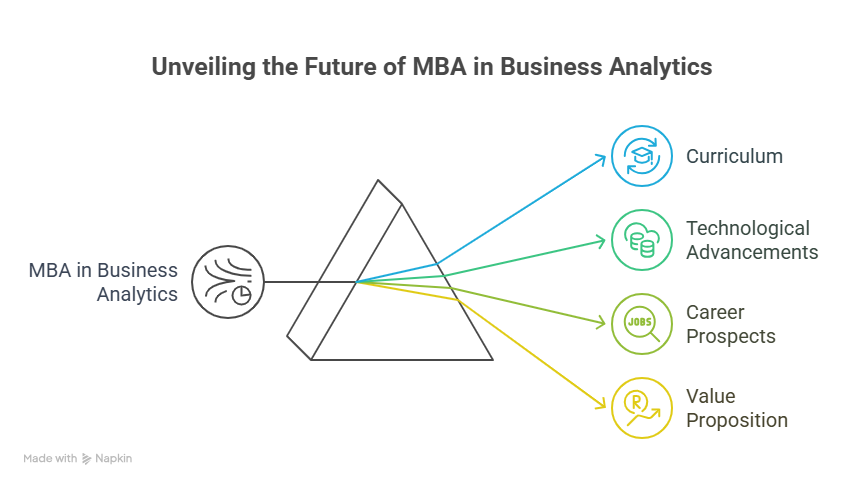
This blog explores what an MBA in Business Analytics in 2026 will look like—its relevance, curriculum updates, skills required, career prospects, salary expectations, and why it remains one of the most future-proof MBA specializations.
Why MBA (Business Analytics) Will Be in High Demand in 2026
Businesses around the globe are now built on data, and this dependency will only accelerate by 2026. Key drivers include:
1. Massive Growth of Artificial Intelligence
AI tools, predictive analytics, and automation platforms will be deeply integrated into every business function—from marketing campaigns to supply chain operations.
2. Exponential Data Generation
With IoT, 5G, and smart devices, companies will produce more data than ever, requiring experts to analyze and convert it into actionable insights.
3. Rising Need for Data-Driven Decision-Making
By 2026, data literacy will be expected across leadership roles. An MBA specializing in Business Analytics provides the perfect blend of managerial expertise + analytical skills.
4. Shortage of Analytics Talent
Despite rising interest, the demand for qualified data-savvy managers far outpaces supply. Graduates of an MBA in BA will continue to be among the most sought-after professionals.
What Makes the MBA in Business Analytics 2026 Curriculum Different?
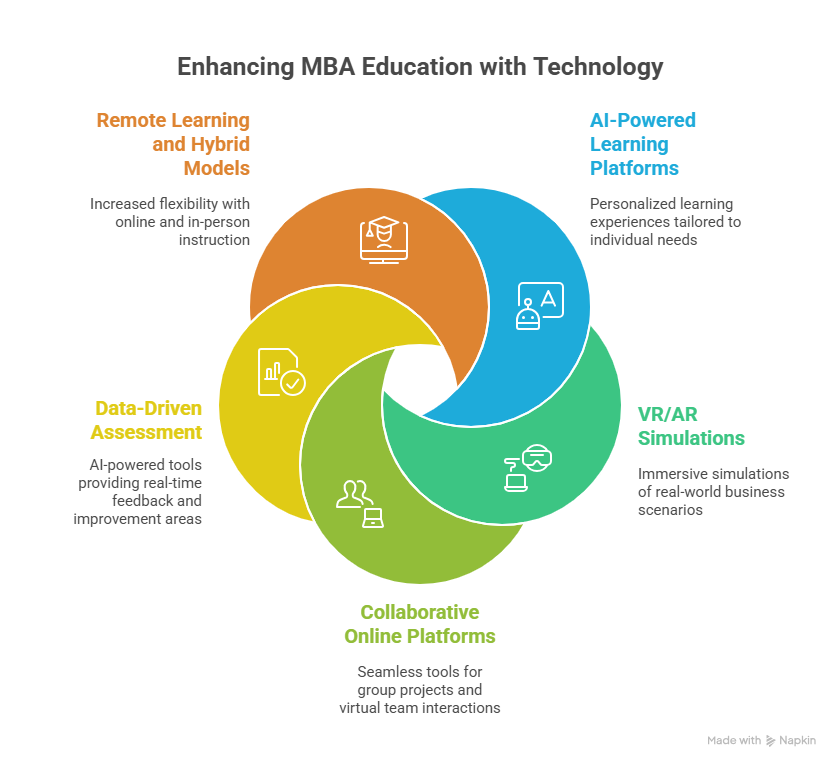
The curriculum will be more advanced, industry-aligned, and technology-driven, with an emphasis on real-world data challenges.
Core Subjects
- Business Statistics
- Predictive & Prescriptive Analytics
- Data Mining & Data Visualization
- Machine Learning for Managers
- Operations & Supply Chain Analytics
- Marketing Analytics
- Financial Modeling
- Big Data Technologies (Hadoop, Spark)
Future-Ready Additions in 2026
- Generative AI for Business
- AI-driven CRM and Marketing
- Cloud Analytics (AWS, Azure, GCP)
- Real-time Decision Systems
- Ethical AI & Data Governance
Students will also work on live corporate projects, virtual simulation labs, and industry-integrated capstones.
Skills You Will Master by 2026
An MBA in Business Analytics equips you with technical, analytical, and leadership capabilities.
Technical Skills
✔ Python, R, SQL
✔ Machine Learning Fundamentals
✔ Tableau, Power BI, Looker
✔ Cloud-based Data Pipelines
✔ Business Intelligence Tools
Managerial Skills
✔ Strategic Decision-Making
✔ Project Management
✔ Leadership & Communication
✔ Problem-solving with Data
✔ Cross-functional Collaboration
Career Opportunities After MBA (Business Analytics) in 2026
This specialization opens doors across industries such as finance, healthcare, e-commerce, manufacturing, consulting, and technology.
Top Job Roles
- Business Analyst
- Data Analyst
- Product Analyst
- Analytics Consultant
- Marketing Analyst
- Financial Analyst
- Data Strategy Manager
- AI Project Manager
- Business Intelligence Manager
Emerging roles in 2026
- AI Business Strategist
- Generative AI Analytics Specialist
- Real-Time Insights Manager
- Automation & AI Integration Consultant
Salary Expectations in 2026
While salaries vary by country, company, and experience, MBA (Business Analytics) graduates typically earn among the highest packages in the MBA domain.
Average Salary Range (Global Estimate)
- Entry-level: $60,000 – $95,000
- Mid-career: $110,000 – $150,000
- Senior roles: $180,000+
In India, salaries are expected to range from ₹8 LPA to ₹25 LPA, with top firms offering even more.
Top Industries Hiring MBA Business Analytics Graduates in 2026
- IT & Tech
- Banking & Financial Services
- Healthcare
- Retail & E-commerce
- Consulting Firms
- Manufacturing & Logistics
- Telecom
- Media & Advertising
Why Choose an MBA in Business Analytics in 2026?
✔ Combines managerial intelligence with analytical expertise
✔ High job security & global relevance
✔ Attractive salary packages
✔ Opportunities in almost every sector
✔ Long-term career growth with AI and automation
FAQ: MBA (Business Analytics) in 2026
1. What is an MBA (Business Analytics) in 2026?
An MBA (Business Analytics) in 2026 is a postgraduate management program designed to train students in data-driven decision-making using analytics, artificial intelligence, machine learning, and business strategy. The 2026 curriculum is more advanced, focusing on real-time analytics, generative AI, and cloud-based data systems.
2. Is MBA (Business Analytics) a good career option in 2026?
Yes. In 2026, companies across all industries will rely heavily on data and AI for decision-making. This creates strong demand for professionals who can understand data, analytics, and business strategy. It is one of the highest-paying and most in-demand MBA specializations.
3. What skills do I need for an MBA (Business Analytics) in 2026?
You’ll benefit from skills in basic math, statistics, logical reasoning, Excel, and communication. During the program, you’ll learn Python, SQL, data visualization, machine learning basics, predictive modeling, and business management skills.
4. Which industries hire MBA (Business Analytics) graduates in 2026?
Industries hiring include:
- IT & Software
- Banking & Finance
- Healthcare
- E-commerce
- Retail
- Consulting
- Manufacturing
- Telecom
Every sector uses data for strategic decisions, making analytics professionals highly valuable.
5. What are the career options after MBA (Business Analytics) in 2026?
Some common roles are:
- Business Analyst
- Data Analyst
- Marketing Analyst
- Financial Analyst
- Product Analyst
- Business Intelligence (BI) Manager
- Analytics Consultant
Emerging roles include AI Strategist, Automation Consultant, and Real-Time Insights Manager.
6. What is the average salary after MBA (Business Analytics) in 2026?
On average:
- Global: $60,000 – $150,000+
- India: ₹8 LPA – ₹25 LPA
Top companies offer even higher packages based on skills and experience.
7. Do I need a technical background for an MBA (Business Analytics) in 2026?
No. While a technical background helps, it is not mandatory. The program teaches analytics, coding basics, tools, and statistical concepts from scratch. Students from any stream—commerce, science, engineering, or arts—can pursue it.
8. What tools and technologies will I learn in MBA (Business Analytics) in 2026?
You will learn:
- Python, R
- SQL
- Tableau, Power BI
- Machine Learning Basics
- Big Data Tools
- Cloud Analytics (AWS, GCP, Azure)
- Generative AI applications for business
9. Is MBA (Business Analytics) better than Data Science in 2026?
If you want leadership roles, business decision-making, and management along with analytics, the MBA (Business Analytics) is better.
If you prefer deep technical roles, coding, and developing machine learning models, Data Science is better.
10. Is the MBA (Business Analytics) relevant to the future?
Absolutely. With AI, automation, predictive analytics, and big data transforming industries, the MBA (Business Analytics) will remain one of the most future-proof management degrees through 2030 and beyond.
Conclusion
By 2026, an MBA in Business Analytics will be one of the most powerful career accelerators. Whether you’re aiming for leadership roles or transitioning into tech-enabled management careers, this specialization prepares you for the future of work—where data, AI, and strategic thinking intersect.
If you’re considering an MBA path that remains future-proof and high-earning, Business Analytics is undoubtedly one of the best choices for 2026 and beyond.