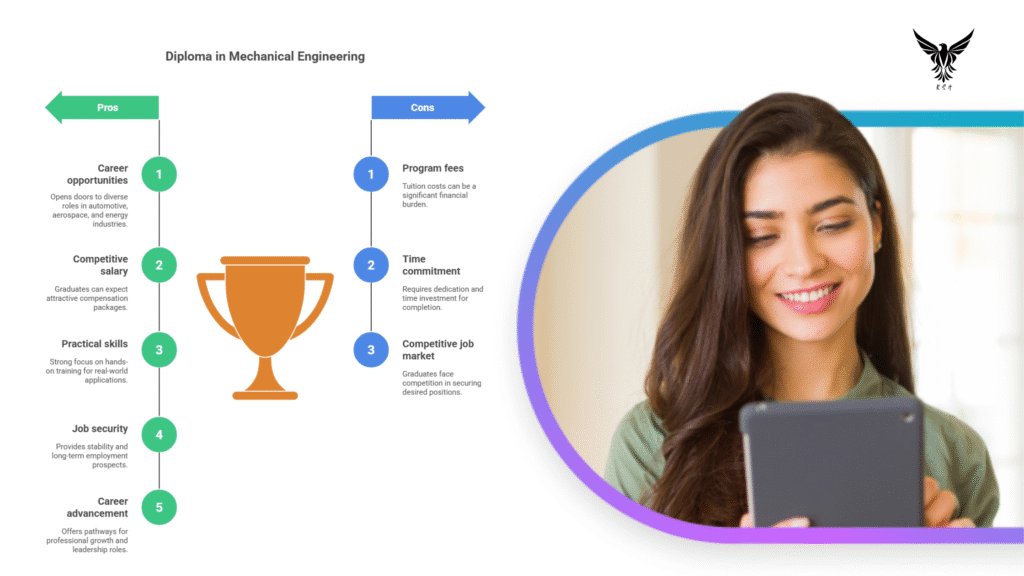

This document provides a comprehensive overview of a Diploma in Mechanical Engineering, covering aspects such as salary expectations, career scope, potential job roles, placement opportunities, associated fees, and the overall benefits of pursuing this qualification. It aims to equip prospective students with the necessary information to make informed decisions about their educational and career paths.
What is a Diploma in Mechanical Engineering?
A Diploma in Mechanical Engineering is a technical degree program that provides students with a foundational understanding of mechanical engineering principles and practices. It typically covers subjects such as:
- Engineering Mechanics: Statics, dynamics, and mechanics of materials.
- Thermodynamics: Principles of heat transfer, energy conversion, and fluid mechanics.
- Manufacturing Processes: Machining, casting, welding, and other manufacturing techniques.
- CAD/CAM: Computer-aided design and computer-aided manufacturing.
- Instrumentation and Control: Measurement techniques and control systems.
- Engineering Drawing: Technical drawing and blueprint reading.
Salary Expectations
The starting salary for a Diploma in Mechanical Engineering graduate can vary depending on factors such as:
- Location: Metropolitan areas and industrial hubs often offer higher salaries.
- Company Size: Larger companies may have more resources to offer competitive salaries.
- Skills and Experience: Internships, projects, and relevant skills can increase earning potential.
- Industry: Some industries, such as aerospace and automotive, may offer higher salaries than others. Diploma in Mechanical Engineering
Entry-Level Salaries:
- India: INR 1.5 LPA to INR 3.5 LPA (Lakhs Per Annum)
- USA: $35,000 to $55,000 per year
- UK: £20,000 to £30,000 per year
Mid-Career Salaries (5-10 years of experience):
- India: INR 4 LPA to INR 8 LPA
- USA: $60,000 to $90,000 per year
- UK: £35,000 to £50,000 per year
These figures are approximate and can vary significantly. Continuous learning and skill development can lead to higher salaries over time.
Career Scope and Job Roles
A Diploma in Mechanical Engineering opens doors to a wide range of career opportunities in various industries. Some common job roles include:
- Mechanical Technician: Assists engineers in designing, developing, and testing mechanical systems.
- Maintenance Technician: Installs, maintains, and repairs mechanical equipment and machinery.
- Production Supervisor: Oversees manufacturing processes and ensures efficient production.
- CAD/CAM Operator: Creates and modifies designs using CAD/CAM software.
- Quality Control Inspector: Inspects products to ensure they meet quality standards.
- Automotive Technician: Diagnoses and repairs vehicles.
- HVAC Technician: Installs and maintains heating, ventilation, and air conditioning systems.
- Design Drafter: Creates technical drawings and blueprints.
- Service Engineer: Provides technical support and maintenance services to clients.
Industries that hire Mechanical Engineering Diploma holders:
- Automotive: Manufacturing, design, and maintenance of vehicles.
- Aerospace: Design, manufacturing, and maintenance of aircraft and spacecraft.
- Manufacturing: Production of various goods and products.
- Energy: Power generation, oil and gas, and renewable energy.
- HVAC: Heating, ventilation, and air conditioning systems.
- Construction: Building and infrastructure projects.
- Pharmaceuticals: Manufacturing and maintenance of pharmaceutical equipment.
- Robotics: Design, development, and maintenance of robots.
Placements
Many colleges and polytechnics offering Diploma in Mechanical Engineering programs have placement cells that facilitate job opportunities for their students. Placement activities typically include:
- Campus Recruitment Drives: Companies visit the campus to conduct interviews and hire students.
- Industry Internships: Students gain practical experience through internships in relevant industries.
- Job Fairs: Events where multiple companies showcase their job openings and recruit candidates.
- Placement Training: Workshops and seminars to prepare students for interviews and job applications.
- Networking Events: Opportunities to connect with industry professionals.
Factors influencing placements:
- College Reputation: Colleges with strong industry connections and a good track record of placements tend to attract more companies.
- Student Performance: Academic performance, skills, and extracurricular activities play a significant role in placement opportunities.
- Industry Demand: The demand for mechanical engineers in specific industries can influence the availability of jobs.
- Location: Colleges located in industrial areas may have better placement opportunities.
Fees
The fees for a Diploma in Mechanical Engineering program can vary depending on the institution, location, and type of program (government or private).
Approximate Fee Ranges:
- India: INR 10,000 to INR 1,00,000 per year
- USA: $5,000 to $20,000 per year
- UK: £4,000 to £10,000 per year
Government colleges and polytechnics typically have lower fees than private institutions. Scholarships and financial aid options may be available to eligible students.
Benefits of a Diploma in Mechanical Engineering
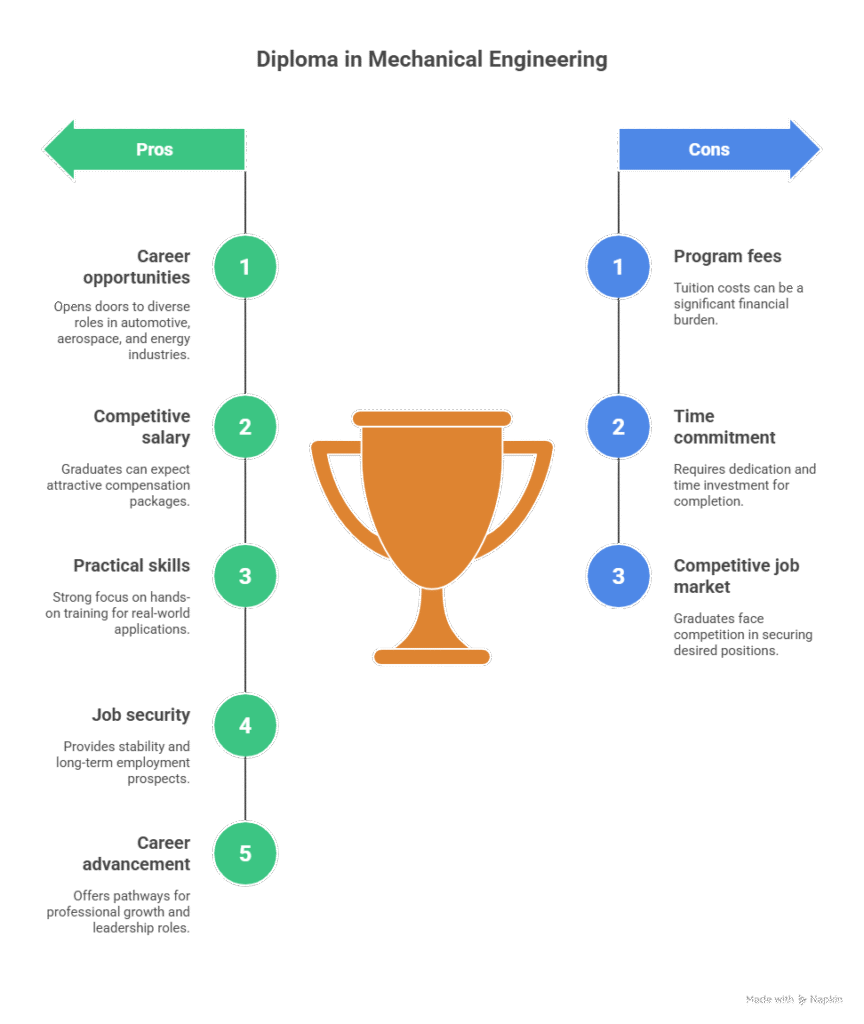
- Job-Oriented Education: The program focuses on practical skills and knowledge that are directly applicable to the workplace.
- Shorter Duration: A diploma program is typically shorter than a bachelor’s degree, allowing students to enter the workforce sooner.
- Cost-Effective: Diploma programs are generally more affordable than bachelor’s degrees.
- Career Advancement: A diploma can serve as a stepping stone to further education, such as a bachelor’s degree in mechanical engineering.
- Hands-on Experience: The program emphasizes practical training and hands-on experience, preparing students for real-world challenges.
- Diverse Career Options: Graduates can pursue a wide range of career paths in various industries.
- Strong Foundation: The program provides a solid foundation in mechanical engineering principles, enabling graduates to excel in their careers.
- Immediate Employment: Diploma holders are often readily employable in entry-level positions.
Further Education
After completing a Diploma in Mechanical Engineering, students can pursue further education to enhance their skills and career prospects. Some options include:
- Bachelor of Engineering (B.E.) or Bachelor of Technology (B.Tech.) in Mechanical Engineering: A bachelor’s degree provides a more in-depth understanding of mechanical engineering principles and opens doors to advanced career opportunities.
- Associate Degree in Mechanical Engineering Technology: This degree provides a similar level of education to a diploma but may offer more transfer credits to a bachelor’s degree program.
- Specialized Diploma Courses: Students can pursue specialized diploma courses in areas such as CAD/CAM, robotics, or automation to enhance their skills in specific areas.
Diploma in Mechanical Engineering – FAQ
1. What is the duration of a Diploma in Mechanical Engineering?
The course typically lasts **3 years** and is divided into 6 semesters.
2. What are the eligibility criteria?
Candidates must have passed **10th standard (SSLC)** with science and mathematics. Some institutes allow **12th pass** students as well.
3. What is the average salary after completing this diploma?
Freshers usually earn between **₹2.0 – ₹3.5 LPA**. With experience, salaries can rise to **₹5 – ₹10 LPA**.
4. What career opportunities are available?
Popular job roles include Mechanical Technician, Junior Engineer, CAD Designer, Maintenance Engineer, Production Supervisor, and Quality Inspector.
5. What is the scope after completing the diploma?
Students can pursue jobs or continue higher studies like **B.Tech lateral entry**, AMIE, or specialized mechanical certifications.
6. What companies hire diploma mechanical engineers?
Top recruiters include Tata Motors, Honda, L&T, Ashok Leyland, BHEL, Toyota, Mahindra, and various manufacturing industries.
7. What is the fee structure for the course?
Fees generally range from **₹20,000 – ₹80,000 per year**, depending on government or private institutions.
8. What are the benefits of studying Mechanical Engineering Diploma?
It offers quick job opportunities, strong industrial demand, practical skills training, and direct entry into B.Tech programs.
9. Is placement available after diploma?
Yes, most polytechnic colleges have **campus placements**, especially in manufacturing, automotive, and production industries.
10. Can I study abroad after a diploma?
Yes, many countries accept Indian diploma holders for higher studies and technical jobs.
Conclusion
A Diploma in Mechanical Engineering is a valuable qualification that provides students with the skills and knowledge necessary to succeed in a variety of industries. With a focus on practical training and job-oriented education, this program offers a pathway to a rewarding and fulfilling career. By carefully considering the factors discussed in this document, prospective students can make informed decisions about their educational and career paths.