
Bachelor of Hotel Management (BHM): A Comprehensive Guide
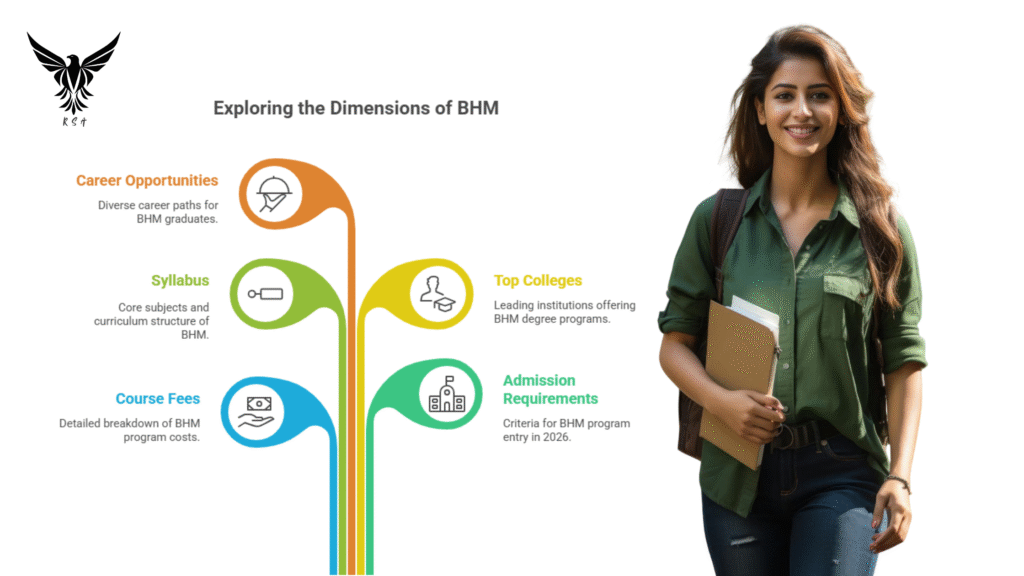
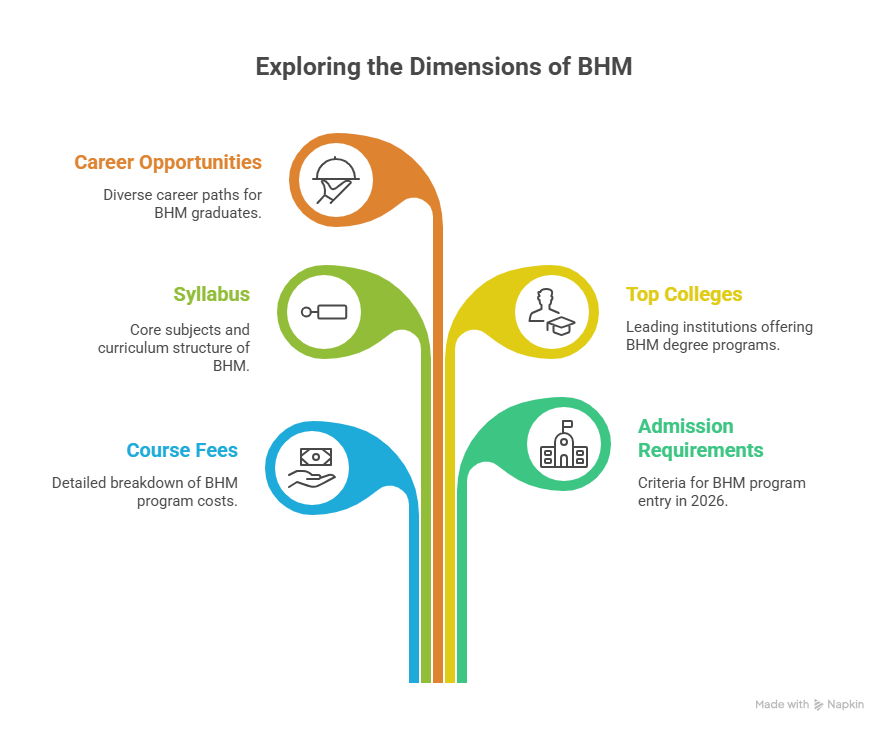
This document provides a comprehensive overview of the Bachelor of Hotel Management (BHM) degree. It covers key aspects such as course fees, admission requirements for 2026, a typical syllabus, a list of top colleges offering the program, and the diverse career opportunities available to BHM graduates. This guide aims to assist prospective students in making informed decisions about pursuing a career in the dynamic and rewarding hospitality industry.
Course Fees
The fees for a Bachelor of Hotel Management (BHM) program can vary significantly depending on the institution, its location, and its reputation. Generally, government-funded colleges and universities tend to have lower tuition fees compared to private institutions.
Government Colleges: The annual fees in government colleges can range from INR 10,000 to INR 50,000.
Private Colleges: Private colleges typically charge higher fees, ranging from INR 50,000 to INR 3,00,000 per year. Some premium private institutions may even exceed this range.
Factors Influencing Fees:
- Infrastructure: Colleges with state-of-the-art facilities, including well-equipped kitchens, model hotel rooms, and computer labs, often charge higher fees.
- Faculty: The quality and experience of the faculty significantly impact the fees. Colleges with experienced and renowned faculty members tend to have higher tuition costs.
- Accreditation and Ranking: Institutions with higher accreditation and rankings often charge more due to their established reputation and quality of education.
- Location: Colleges located in metropolitan cities or prime locations may have higher fees due to the higher cost of living and operational expenses.
Admission 2026
Admission to BHM programs typically involves a combination of academic merit and performance in entrance exams or interviews. The specific requirements may vary across different institutions.
Eligibility Criteria:
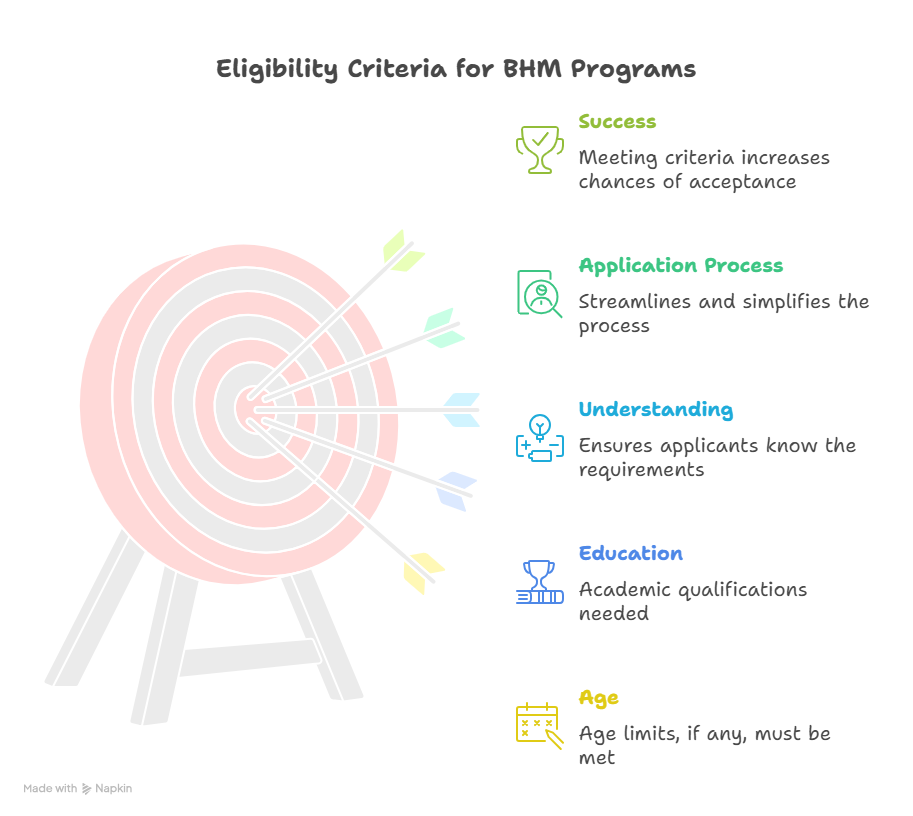
- Educational Qualification: Candidates must have passed the 10+2 examination or its equivalent from a recognized board with a minimum aggregate score (usually 45% to 50%). Some colleges may require English as a compulsory subject.
- Age Limit: There is usually no upper age limit for applying to BHM programs.
Entrance Exams:
Many top BHM colleges conduct their own entrance exams to assess candidates’ aptitude, general knowledge, and English language proficiency. Some popular entrance exams include:
- NCHMCT JEE: The National Council for Hotel Management and Catering Technology Joint Entrance Examination (NCHMCT JEE) is a national-level entrance exam for admission to BHM programs offered by institutes affiliated with NCHMCT.
- State-Level Entrance Exams: Some states conduct their own entrance exams for admission to BHM programs in state-run colleges.
- Private College Entrance Exams: Many private colleges conduct their own entrance exams to select candidates for their BHM programs.
Selection Process:
The selection process typically involves the following stages:
- Application: Candidates need to fill out the application form and submit it along with the required documents.
- Entrance Exam: Candidates who meet the eligibility criteria are required to appear for the entrance exam.
- Group Discussion (GD) and Personal Interview (PI): Shortlisted candidates are called for a group discussion and personal interview. These rounds assess their communication skills, personality, and overall suitability for the hospitality industry.
- Final Selection: The final selection is based on the candidate’s performance in the entrance exam, GD, and PI, as well as their academic record.
Documents Required:
- 10th and 12th mark sheets and certificates
- Entrance exam scorecard (if applicable)
- Passport-sized photographs
- Identity proof (Aadhar card, passport, etc.)
- Caste certificate (if applicable)
Syllabus
The BHM syllabus is designed to provide students with a comprehensive understanding of the various aspects of hotel management, including food production, food and beverage service, front office operations, housekeeping, and management principles.
Core Subjects:
- Food Production: This subject covers the principles of cooking, culinary techniques, and the preparation of various cuisines.
- Food and Beverage Service: This subject focuses on the techniques of serving food and beverages, customer service, and restaurant management.
- Front Office Operations: This subject covers the management of front office operations, including guest registration, check-in/check-out procedures, and handling guest inquiries.
- Housekeeping: This subject focuses on the principles of maintaining cleanliness and hygiene in hotels, including room cleaning, laundry operations, and pest control.
- Hotel Accounting: This subject covers the principles of accounting and financial management in the hotel industry.
- Hotel Law: This subject covers the legal aspects of hotel operations, including contracts, licensing, and regulations.
- Tourism and Hospitality Marketing: This subject focuses on the principles of marketing and promotion in the tourism and hospitality industry.
- Human Resource Management: This subject covers the principles of managing human resources in the hotel industry, including recruitment, training, and employee relations.
Elective Subjects:
In addition to the core subjects, students may also have the option to choose elective subjects based on their interests and career goals. Some common elective subjects include:
- Event Management
- Travel and Tourism Management
- Revenue Management
- Spa Management
Practical Training:
A significant component of the BHM program is practical training, which provides students with hands-on experience in various hotel departments. This training typically involves internships in hotels, restaurants, and other hospitality establishments.
Top Colleges
Several top colleges in India offer BHM programs. Here are a few of the most reputable institutions:
- Institute of Hotel Management (IHM), Delhi
- Institute of Hotel Management (IHM), Mumbai
- Institute of Hotel Management (IHM), Chennai
- Welcomgroup Graduate School of Hotel Administration (WGSHA), Manipal
- Oberoi Centre of Learning and Development (OCLD), Delhi
- Christ University, Bangalore
- Amity School of Hospitality, Noida
- Lovely Professional University, Phagwara
Career Scope
A BHM degree opens up a wide range of career opportunities in the hospitality industry and related sectors. Some popular career paths for BHM graduates include:
- Hotel Management: Graduates can work in various departments of hotels, including front office, food and beverage, housekeeping, and sales and marketing.
- Restaurant Management: Graduates can manage restaurants, cafes, and other food service establishments.
- Event Management: Graduates can plan and execute events such as weddings, conferences, and corporate events.
- Tourism and Travel: Graduates can work in travel agencies, tour operators, and tourism boards.
- Airline Catering: Graduates can work in airline catering companies, managing food and beverage services for airlines.
- Cruise Line: Graduates can work on cruise ships, managing various aspects of hospitality services.
- Retail Management: The customer service and management skills learned in a BHM program are transferable to retail management roles.
- Entrepreneurship: Graduates can start their own businesses in the hospitality industry, such as restaurants, cafes, or event management companies.
The hospitality industry is a global industry, and BHM graduates have opportunities to work in hotels and resorts around the world. With experience and further education, BHM graduates can advance to senior management positions and become leaders in the hospitality industry.