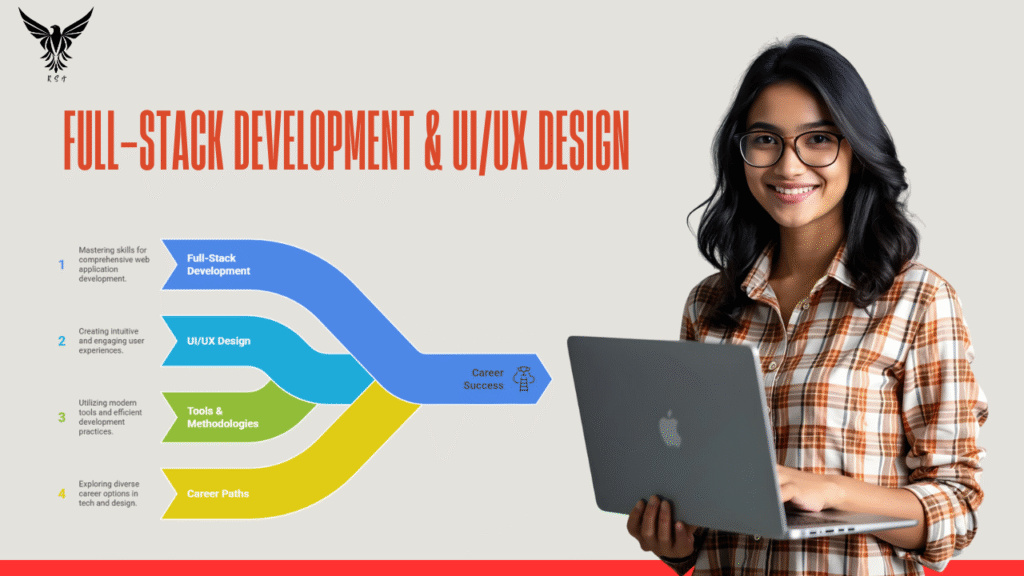

- What is Full-Stack Development?
- Key Technologies in Full-Stack Development
- Frontend
- Backend
- Databases
- DevOps Tools
- What is UI/UX Design?
- Difference Between UI & UX
- Why UI/UX Matters?
- The Connection Between Full-Stack Development and UI/UX Design
- How They Work Together
- Why Businesses Prefer Professionals Who Understand Both?
- Essential Skills Required in Full-Stack Development UI/UX Design
- Full-Stack Skills
- UI/UX Skills
- Soft Skills
- Top Tools Used in Development UI/UX Design
- UI/UX Design Tools
- Development Tools
- Career Opportunities in Full-Stack Development and UI/UX Design
- Career Options in Full-Stack Development
- Career Options in UI/UX Design
- Hybrid Career Options
- Salary Expectations (Approx in India)
- Why You Should Learn Full-Stack Development & UI/UX Design Together
- 1. Better Understanding of the Product
- 2. High Demand in Job Market
- 3. Increased Creativity
- 4. More Earning Potential
- 5. Complete Project Control
- How to Start Learning Development UI/UX Design?
- Step 1: Learn the Basics
- Step 2: Choose Tech Stacks
- Step 3: Master UI/UX Tools
- Step 4: Create Projects
- Step 5: Build a Strong Portfolio
- Step 6: Apply for Jobs or Start Freelancing
- Future Scope of Full-Stack Development & UI/UX Design
- Key Future Trends
- Conclusion
- ✔ 10 FAQs on Full-Stack Development & UI/UX Design
In the rapidly evolving digital world, two fields stand out as the foundation of modern technology solutions — Full-Stack Development and UI/UX Design. Whether it’s building high-performance web applications, creating seamless user interfaces, or enhancing digital experiences, the combination of Development UI/UX Design has become essential for businesses and developers across the globe.
This complete guide explains what Full-Stack Development and UI/UX Design are, their importance, skills, tools, career opportunities, benefits, and how mastering both can give you an unmatched competitive edge.
What is Full-Stack Development?
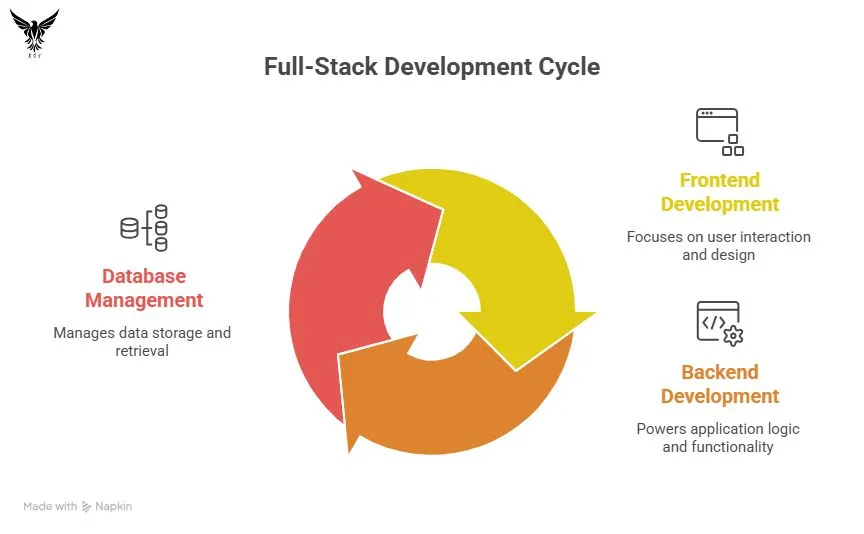
Full-Stack Development refers to the practice of working on both the frontend and backend aspects of a web or mobile application. A full-stack developer understands:
- Frontend (Client-Side Development)
This layer focuses on how users interact with the application. It includes UI elements, layout, design, responsiveness, and interactivity. - Backend (Server-Side Development)
This layer powers the logic, database interactions, APIs, user authentication, and overall functionality of the application. - Database Management
Full-stack developers manage data storage, processing, and retrieval.
Key Technologies in Full-Stack Development
Frontend
- HTML5
- CSS3
- JavaScript
- React.js
- Angular
- Vue.js
Backend
- Node.js
- Express.js
- Python Django
- Java Spring Boot
- PHP Laravel
Databases
- MongoDB
- MySQL
- PostgreSQL
- Firebase
DevOps Tools
- Docker
- Kubernetes
- Git & GitHub
- CI/CD pipelines
What is UI/UX Design?
UI/UX Design plays a vital role in creating meaningful digital experiences. While Full-Stack Development handles the functionality, UI/UX Design ensures the application is easy to use, visually appealing, and user-centric.
Difference Between UI & UX
| Aspect | UI (User Interface) | UX (User Experience) |
|---|---|---|
| Focus | Visual design of screens and elements | Overall user journey and satisfaction |
| Includes | Colors, typography, buttons, layout | Research, wireframes, user flow, testing |
| Goal | Make the interface attractive | Make the product easy and enjoyable to use |
Why UI/UX Matters?
- Enhances user satisfaction
- Boosts customer retention
- Improves app usability
- Drives conversions and business growth
- Establishes a strong brand presence
The Connection Between Full-Stack Development and UI/UX Design
Modern digital products require a seamless blend of Development UI/UX Design. A well-designed interface fails if the backend is weak, and similarly, powerful functionality is useless if users find the design confusing.
How They Work Together
- UI/UX Designers plan the visual layout, flow, and user experience.
- Frontend Developers convert designs into functional interfaces.
- Backend Developers build the logic that processes data.
- Full-Stack Developers handle both ends, ensuring smooth integration.
Why Businesses Prefer Professionals Who Understand Both?
- Better communication between teams
- Faster project delivery
- Efficient problem-solving
- Cost-effective product development
- Improved user satisfaction
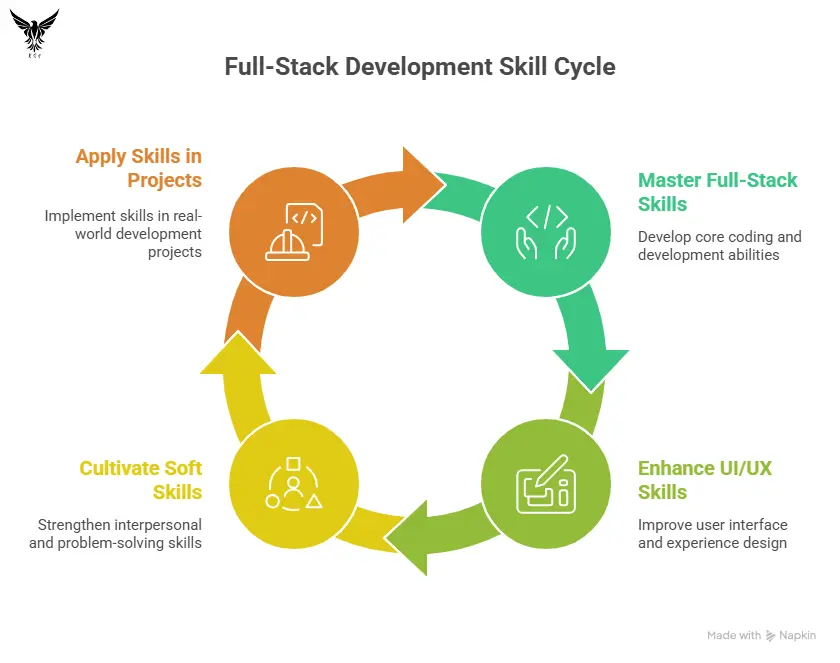
Essential Skills Required in Full-Stack Development UI/UX Design
Full-Stack Skills
- HTML, CSS, JavaScript
- Responsive design principles
- API creation and integration
- Database management
- Version control (Git)
UI/UX Skills
- User research
- Wireframe & prototype creation
- Visual design principles
- Color theory & typography
- Design tools: Figma, Adobe XD
Soft Skills
- Problem-solving
- Creativity
- Communication
- Time management
- Analytical thinking
Top Tools Used in Development UI/UX Design
UI/UX Design Tools
- Figma
- Adobe XD
- Sketch
- InVision
- Canva (for quick visuals)
Development Tools
- VS Code
- GitHub
- Postman
- Node package manager
- Browser dev tools
Career Opportunities in Full-Stack Development and UI/UX Design
The combination of Development UI/UX Design opens multiple career doors. Some top roles include:
Career Options in Full-Stack Development
- Full-Stack Engineer
- Web Developer
- Backend Developer
- Frontend Developer
- Software Developer
Career Options in UI/UX Design
- UX Designer
- UI Designer
- Interaction Designer
- Product Designer
- User Researcher
Hybrid Career Options
- UI Engineer
- Frontend UI/UX Developer
- Product Experience Developer
- Full-Stack Designer
Salary Expectations (Approx in India)
| Skill Level | Full-Stack Developer | UI/UX Designer |
|---|---|---|
| Beginner | ₹3–5 LPA | ₹2.8–4.5 LPA |
| Mid-Level | ₹6–10 LPA | ₹5–8 LPA |
| Senior | ₹12–20+ LPA | ₹10–18+ LPA |
Why You Should Learn Full-Stack Development & UI/UX Design Together
Learning both fields gives you a strong advantage:
1. Better Understanding of the Product
You can see both technical and design aspects, improving your overall output.
2. High Demand in Job Market
Companies prefer multi-skilled professionals who can handle end-to-end development.
3. Increased Creativity
Designing and developing solutions enhances your innovation capability.
4. More Earning Potential
Combined skills lead to higher salaries and freelance opportunities.
5. Complete Project Control
You can build entire applications by yourself, from wireframe to deployment.
How to Start Learning Development UI/UX Design?
Step 1: Learn the Basics
- Start with HTML, CSS, JavaScript
- Understand design principles
Step 2: Choose Tech Stacks
- MERN (MongoDB, Express, React, Node)
- PERN (PostgreSQL, Express, React, Node)
Step 3: Master UI/UX Tools
- Begin with Figma
- Create sample designs
Step 4: Create Projects
Build practical applications such as:
- Portfolio website
- E-commerce website
- Social media UI design
Step 5: Build a Strong Portfolio
Add:
- Case studies
- Designs
- Web applications
- Code samples
Step 6: Apply for Jobs or Start Freelancing
Showcase your skills on:
- GitHub
- Dribbble
- Behance
Future Scope of Full-Stack Development & UI/UX Design
The demand for Development UI/UX Design is increasing due to:
- Digital transformation
- Startup growth
- E-commerce boom
- AI-powered applications
- Mobile-first design trends
Key Future Trends
- AI-driven design
- No-code & low-code platforms
- Voice UI/UX
- Motion UI
- Micro-frontend architecture
Conclusion
Full-Stack Development and UI/UX Design are the backbone of the digital world. Whether you want to build websites, create apps, or design user-friendly digital products, these skills offer endless opportunities. Combining Development UI/UX Design not only strengthens your career but also helps you become a complete technology professional capable of building world-class solutions.
From small startups to global tech companies, the demand for professionals who can balance design and development is growing faster than ever. If you’re planning a career in tech, mastering both fields is one of the smartest choices you can make.
✔ 10 FAQs on Full-Stack Development & UI/UX Design
1. What is Full-Stack Development?
Full-Stack Development refers to working on both the frontend and backend of an application, including user interfaces, server logic, and databases.
2. What does UI/UX Design mean?
UI/UX Design focuses on creating visually appealing interfaces (UI) and ensuring a smooth, satisfying user journey (UX).
3. Why is UI/UX important in modern development?
Good UI/UX improves user engagement, increases conversions, builds brand trust, and enhances the product’s overall experience.
4. Is it beneficial to learn both Full-Stack Development and UI/UX Design?
Yes. Learning both gives you a strong competitive advantage, allows you to handle complete product development, and increases job chances.
5. What skills are required for Full-Stack Development?
Key skills include HTML, CSS, JavaScript, React, Node.js, database management, API development, and version control (Git).
6. What skills do I need for UI/UX Design?
You need knowledge of user research, wireframing, prototyping, typography, color theory, and tools like Figma and Adobe XD.
7. What are the career options in Development UI/UX Design?
Top roles include Full-Stack Developer, UI Designer, UX Designer, Frontend Developer, Product Designer, and UI/UX Engineer.
8. Which tools are most used in UI/UX Design?
Popular tools include Figma, Adobe XD, Sketch, InVision, and Canva.
9. What is the salary of Full-Stack Developers and UI/UX Designers in India?
Full-Stack Developers earn around ₹3–20 LPA depending on experience, and UI/UX Designers earn approximately ₹2.8–18 LPA.
10. How can I start learning Full-Stack Development and UI/UX Design?
Begin with HTML/CSS/JS, learn design basics, choose a development stack like MERN, practice Figma, build projects, and create a strong portfolio.