
B.Sc Nursing: A Comprehensive Guide for 2026 Aspirants
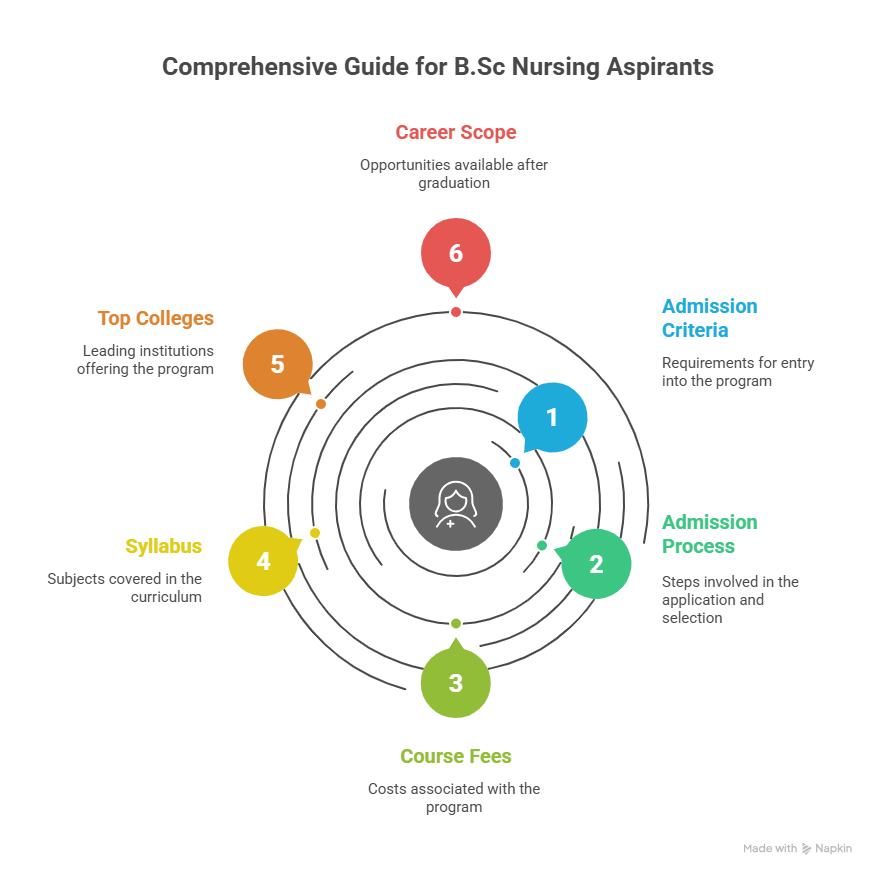
This document provides a comprehensive overview of the B.Sc Nursing program, focusing on aspects relevant to prospective students in 2026. It covers essential details such as course fees, admission procedures, the syllabus, top colleges offering the program, and the career scope available to graduates. This guide aims to equip aspiring nurses with the necessary information to make informed decisions about their education and career path.
B.Sc Nursing: An Overview
The Bachelor of Science in Nursing (B.Sc Nursing) is a four-year undergraduate degree program designed to prepare students for a career as registered nurses. The curriculum combines theoretical knowledge with practical training, equipping students with the skills and competencies necessary to provide quality healthcare services.
B.Sc Nursing Admission 2026: Eligibility Criteria
Generally, the eligibility criteria for B.Sc Nursing admission in 2026 are expected to remain consistent with previous years. Key requirements typically include:
- Educational Qualification: Candidates must have passed the 10+2 examination (or equivalent) with Physics, Chemistry, Biology, and English as compulsory subjects.
- Minimum Marks: A minimum aggregate score (usually around 45-50%) in the qualifying examination is generally required. This percentage may vary depending on the institution.
- Age Limit: Some institutions may have a minimum age requirement, typically 17 years as of December 31st of the admission year.
- Medical Fitness: Candidates must be medically fit to pursue the course.
It is crucial to check the specific eligibility criteria of the individual colleges or universities you are interested in, as they may have additional requirements or specific cut-off marks.
B.Sc Nursing Admission Process 2026
The admission process for B.Sc Nursing programs varies across institutions. Generally, it involves the following steps:
- Application: Candidates need to fill out the online or offline application form provided by the respective college or university.
- Entrance Exam: Many institutions conduct entrance exams to screen candidates. Some popular entrance exams include:
- AIIMS Nursing Entrance Exam
- JIPMER Nursing Entrance Exam
- State-level Nursing Entrance Exams (e.g., UP Nursing Entrance Exam, WBJEE ANM & GNM)
- University-specific Entrance Exams
- Merit List: Based on the entrance exam scores or marks obtained in the qualifying examination (10+2), a merit list is prepared.
- Counseling: Shortlisted candidates are called for counseling, where they can choose their preferred college based on their rank and availability of seats.
- Document Verification: Candidates need to submit original documents for verification during the counseling process.
- Admission Confirmation: After successful document verification and payment of fees, admission is confirmed.
B.Sc Nursing Course Fees
The course fees for B.Sc Nursing programs vary significantly depending on the type of institution (government or private), its location, and its reputation.
- Government Colleges: Government colleges typically have lower fees, ranging from INR 10,000 to INR 50,000 per year.
- Private Colleges: Private colleges generally have higher fees, ranging from INR 50,000 to INR 2,00,000 or more per year.
In addition to tuition fees, students may also need to pay for other expenses such as hostel accommodation, mess charges, examination fees, and study materials.
B.Sc Nursing Syllabus
The B.Sc Nursing syllabus is designed to provide students with a strong foundation in nursing principles and practices. The curriculum typically covers the following subjects:
Year 1:
- Anatomy
- Physiology
- Biochemistry
- Nutrition
- Nursing Foundations
- Psychology
- Sociology
- English
- Introduction to Computers
Year 2:
- Medical-Surgical Nursing I
- Pharmacology
- Pathology
- Genetics
- Community Health Nursing I
- Communication and Educational Technology
Year 3:
- Medical-Surgical Nursing II
- Child Health Nursing
- Mental Health Nursing
- Midwifery and Obstetrical Nursing
Year 4:
- Medical-Surgical Nursing III
- Community Health Nursing II
- Nursing Research and Statistics
- Management of Nursing Services and Education
In addition to these core subjects, students also undergo clinical training in hospitals and community health centers to gain practical experience.
Top Colleges for B.Sc Nursing
Several reputable institutions across India offer B.Sc Nursing programs. Some of the top colleges include:
- All India Institute of Medical Sciences (AIIMS), New Delhi
- Postgraduate Institute of Medical Education and Research (PGIMER), Chandigarh
- Christian Medical College (CMC), Vellore
- Armed Forces Medical College (AFMC), Pune
- King George’s Medical University (KGMU), Lucknow
- Sri Ramachandra Institute of Higher Education and Research, Chennai
- Manipal College of Nursing, Manipal
- NIMS University, Jaipur
- Jamia Hamdard University, New Delhi
- Siksha ‘O’ Anusandhan (SOA), Bhubaneswar
This list is not exhaustive, and many other excellent nursing colleges are available across the country. It is advisable to research and choose a college that aligns with your academic goals and career aspirations.
Career Scope after B.Sc Nursing
Graduates of B.Sc Nursing programs have a wide range of career opportunities in the healthcare sector. Some of the common career paths include:
- Registered Nurse (RN): Working in hospitals, clinics, nursing homes, and other healthcare settings, providing direct patient care.
- Nurse Educator: Teaching nursing students in colleges and universities.
- Nurse Manager: Supervising and managing nursing staff in healthcare facilities.
- Community Health Nurse: Providing healthcare services to individuals and families in community settings.
- Occupational Health Nurse: Providing healthcare services to employees in workplaces.
- School Nurse: Providing healthcare services to students in schools.
- Nurse Practitioner: An advanced practice registered nurse (APRN) who can diagnose and treat illnesses, prescribe medications, and provide other healthcare services. (Requires further education and certification)
- Clinical Nurse Specialist: An APRN who specializes in a particular area of nursing, such as cardiology, oncology, or pediatrics. (Requires further education and certification)
The demand for nurses is consistently high, both in India and abroad. With experience and further education, nurses can advance their careers and specialize in various areas of healthcare.
Conclusion
The B.Sc Nursing program offers a rewarding and fulfilling career path for individuals passionate about healthcare and patient care. By understanding the admission process, syllabus, course fees, and career scope, aspiring nurses can make informed decisions and embark on a successful journey in the nursing profession. As the healthcare landscape continues to evolve, the role of nurses will become increasingly important, making B.Sc Nursing a promising and valuable career choice for 2026 aspirants.
B.Sc Nursing – Frequently Asked Questions
The B.Sc Nursing program is a 4-year undergraduate course including clinical training.
The average annual fee ranges from ₹50,000 to ₹2,00,000 depending on the college.
Students must have passed 10+2 with Physics, Chemistry, and Biology with at least 45–50% marks.
Key subjects include Anatomy, Physiology, Microbiology, Nursing Foundation, Medical-Surgical Nursing, and Community Health Nursing.
Students can work as Staff Nurse, ICU Nurse, Community Health Nurse, Nursing Tutor, Ward Supervisor, or pursue M.Sc Nursing.
Top colleges include AIIMS, PGIMER, CMC Vellore, BHU, and many reputed private institutions.