
How to Become an Azure Administrator: A Comprehensive Guide
This blog post provides a comprehensive guide on how to become a successful Azure Administrator. We will explore the role’s responsibilities, required skills, qualifications, and potential salary, equipping you with the knowledge to embark on this rewarding career path. We’ll delve into the essential aspects of Azure administration, covering everything from foundational knowledge to advanced skills, helping you understand what it takes to excel in this in-demand field.
What is an Azure Administrator?
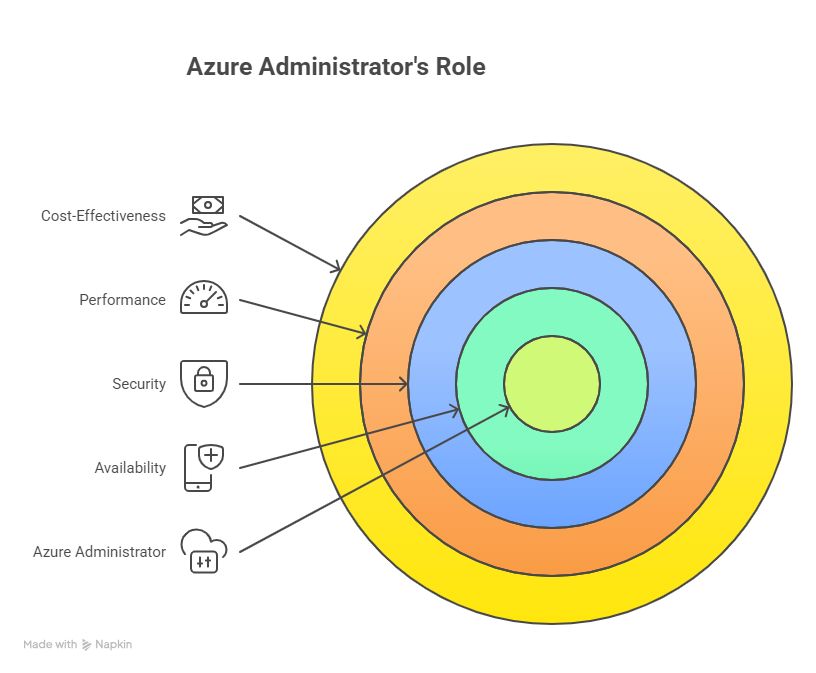
An Azure Administrator is a cloud professional responsible for implementing, managing, and monitoring an organization’s Microsoft Azure environment. They are the go-to experts for ensuring the availability, security, performance, and cost-effectiveness of Azure resources. They work closely with other IT professionals, such as developers, security engineers, and database administrators, to deliver robust and scalable cloud solutions
Essential Skills for an Azure Administrator
To excel as an Azure Administrator, you need a combination of technical skills, soft skills, and a strong understanding of cloud computing principles. Here are some of the most important skills:
- Cloud Computing Fundamentals: A solid understanding of cloud computing concepts, including IaaS, PaaS, and SaaS, as well as cloud deployment models (public, private, and hybrid).
- Azure Services: In-depth knowledge of Azure services, including virtual machines, storage accounts, virtual networks, Azure Active Directory, Azure Monitor, Azure Backup, and Azure Security Center.
- Networking: Strong networking skills, including TCP/IP, DNS, routing, and firewalls.
- Operating Systems: Experience with Windows Server and Linux operating systems.
- Scripting: Proficiency in scripting languages such as PowerShell and Azure CLI.
- Automation: Experience with automation tools such as Azure Automation and Infrastructure as Code (IaC) tools like Terraform or ARM templates.
- Security: A strong understanding of security principles and best practices, including identity and access management, network security, and data encryption.
- Problem-Solving: Excellent problem-solving and troubleshooting skills.
- Communication: Strong communication and collaboration skills.
- Documentation: Ability to create and maintain clear and concise documentation.
- Continuous Learning: A commitment to continuous learning and staying up-to-date with the latest Azure technologies.
Qualifications and Certifications
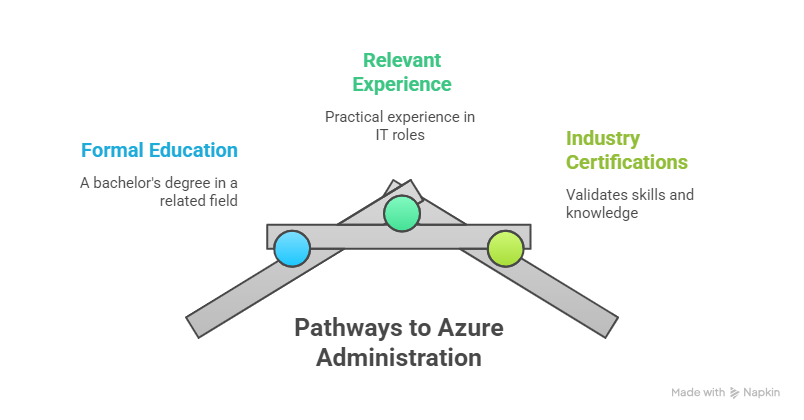
While a formal degree is not always required, a bachelor’s degree in computer science, information technology, or a related field can be beneficial. However, relevant experience and industry certifications are often more valuable.
The most relevant certification for Azure Administrators is the Microsoft Certified: Azure Administrator Associate (AZ-104). This certification validates your skills and knowledge in implementing, managing, and monitoring an organization’s Microsoft Azure environment.
AZ-900: Azure Fundamentals
AZ-104: Azure Administrator Associate
AZ-305: Azure Solutions Architect (If you want to advance further)
SC-900 / SC-300 (Security focus)
Other valuable certifications include:
- Microsoft Certified: Azure Fundamentals (AZ-900): A foundational certification that demonstrates a basic understanding of cloud computing concepts and Azure services.
- Microsoft Certified: Security, Compliance, and Identity Fundamentals (SC-900): A foundational certification that demonstrates a basic understanding of security, compliance, and identity concepts.
Salary Expectations
The salary for an Azure Administrator can vary depending on experience, location, and the size of the organization. However, Azure Administrators are generally well-compensated due to the high demand for their skills.
According to recent data, the average salary for an Azure Administrator in the United States ranges from $80,000 to $140,000 per year. Senior Azure Administrators with extensive experience and specialized skills can earn even more.
Average Salary (India)
- Entry-Level: ₹4.5 – ₹6 LPA
- Mid-Level: ₹6 – ₹10 LPA
- Senior-Level: ₹10 – ₹18 LPA
- Top IT Companies: ₹12 – ₹22 LPA
Global Salary
- USA: $75,000 – $125,000 per year
- UK: £40,000 – £70,000 per year
- Canada: CAD 65,000 – CAD 110,000 per year
Keywords: Azure Administrator Salary, Azure Jobs, Cloud Salary, AZ-104 Salary
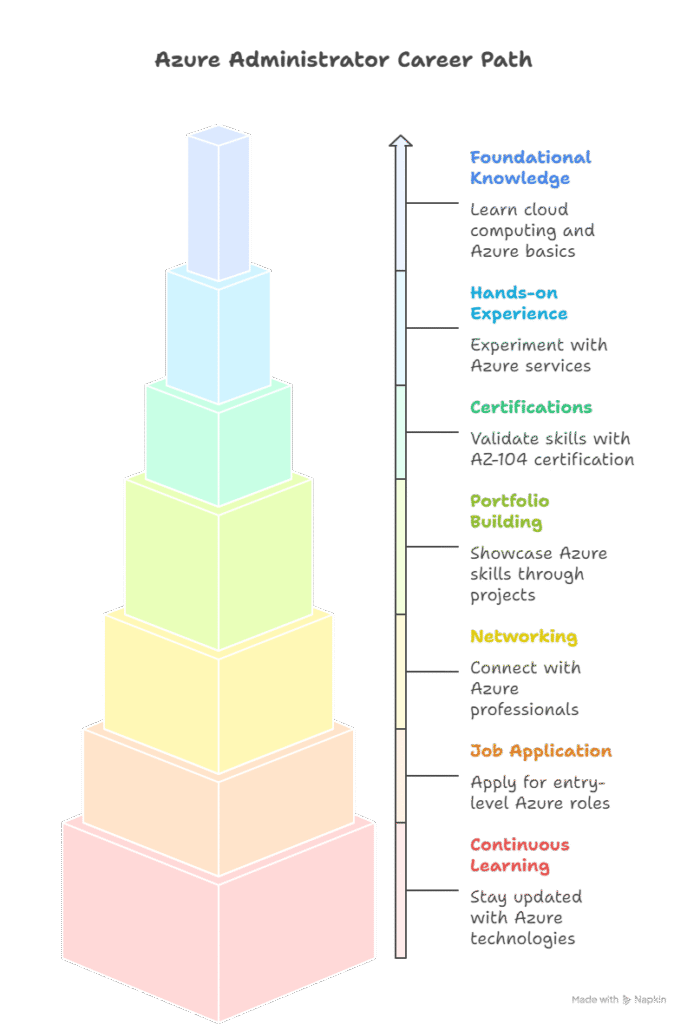
Steps to Becoming an Azure Administrator
- Gain Foundational Knowledge: Start by learning the fundamentals of cloud computing and Azure services. The AZ-900 certification is a great starting point.
- Hands-on Experience: Get hands-on experience with Azure by creating a free Azure account and experimenting with different services.
- Pursue Relevant Certifications: Obtain the Azure Administrator Associate (AZ-104) certification to validate your skills and knowledge.
- Build a Portfolio: Create a portfolio of projects that showcase your Azure skills and experience.
- Network with Professionals: Attend industry events, join online communities, and connect with other Azure professionals.
- Apply for Azure Administrator Roles: Start applying for entry-level Azure Administrator roles and gradually work your way up to more senior positions.
- Continuous Learning: Stay up-to-date with the latest Azure technologies and trends by attending conferences, reading blogs, and taking online courses.
Key Responsibilities of an Azure Administrator
The role of an Azure Administrator is multifaceted and demanding, requiring a broad range of technical skills and a deep understanding of cloud computing principles. Here’s a breakdown of the core responsibilities:
- Resource Management: Provisioning, configuring, and managing Azure resources such as virtual machines, storage accounts, virtual networks, and databases. This includes sizing resources appropriately, configuring networking, and ensuring optimal performance.
- Identity and Access Management (IAM): Implementing and managing Azure Active Directory (Azure AD) for user authentication, authorization, and access control. This involves creating and managing user accounts, groups, and roles, as well as configuring multi-factor authentication (MFA) and conditional access policies.
- Security Management: Implementing and maintaining security policies and procedures to protect Azure resources from unauthorized access and cyber threats. This includes configuring firewalls, network security groups (NSGs), and Azure Security Center, as well as monitoring security logs and responding to security incidents.
- Monitoring and Logging: Configuring and monitoring Azure resources to ensure optimal performance and availability. This involves using Azure Monitor to collect and analyze logs, metrics, and alerts, as well as troubleshooting performance issues and identifying potential problems.
- Backup and Recovery: Implementing and managing backup and recovery solutions to protect Azure resources from data loss. This includes configuring Azure Backup and Azure Site Recovery, as well as testing and validating backup and recovery procedures.
- Cost Management: Monitoring and optimizing Azure spending to ensure cost-effectiveness. This involves using Azure Cost Management to track spending, identify cost-saving opportunities, and implement cost optimization strategies.
- Automation: Automating repetitive tasks using Azure Automation, PowerShell, and other scripting tools. This helps to improve efficiency, reduce errors, and free up time for more strategic tasks.
- Disaster Recovery: Planning and implementing disaster recovery strategies to ensure business continuity in the event of an outage. This includes configuring Azure Site Recovery to replicate virtual machines to a secondary region and testing failover procedures.
- Compliance: Ensuring that Azure resources comply with relevant industry regulations and organizational policies. This involves implementing security controls, monitoring compliance status, and addressing any compliance gaps.
- Troubleshooting: Diagnosing and resolving technical issues related to Azure resources. This requires strong problem-solving skills and a deep understanding of Azure services and technologies.
Conclusion
Becoming an Azure Administrator is a rewarding career path with excellent growth potential. By acquiring the necessary skills, pursuing relevant certifications, and gaining hands-on experience, you can position yourself for success in this in-demand field. Remember to stay curious, keep learning, and embrace the challenges that come with managing complex cloud environments. Good luck on your journey to becoming a successful Azure Administrator!