
- What is B.Design?
- Why Choose B.Design?
- B.Design Course Highlights
- B.Design Eligibility Criteria
- B.Design Admission Process
- Step 1: Entrance Exam
- Step 2: Studio Test / Interview
- Step 3: Final Selection
- B.Design Specializations
- Popular B.Design Specializations
- B.Design Syllabus and Subjects
- Core Subjects (First 2 Years)
- Specialization Subjects (Last 2 Years)
- B.Design Fees Structure
- Top Colleges Offering B.Design in India
- Skills Required for B.Design Students
- Career Scope After B.Design
- Popular Job Roles After B.Design
- Salary After B.Design
- Higher Studies After B.Design
- B.Design vs BFA: Which is Better?
- Future Scope of B.Design
- Advantages of Studying B.Design
- Challenges of B.Design
- Who Should Choose B.Design?
- Final Thoughts
- B.Design vs BFA:
- B.Design vs BFA – Quick Comparison Table
- FAQs on B.Design
- 1. What is B.Design?
- 2. Who is eligible for B.Design?
- 3. What is the duration of the B.Design course?
- 4. Is an entrance exam required for B.Design admission?
- 5. What are the specializations available in B.Design?
- 6. What subjects are taught in B.Design?
- 7. What is the average fee for B.Design in India?
- 8. What career options are available after B.Design?
- 9. What is the salary after B.Design?
- 10. Is B.Design better than BFA?
- 11. Can I do M.Design after B.Design?
- 12. Is B.Design a good career choice in the future?
- 13. Can I do B.Design without drawing skills?
- 14. Does B.Design offer freelance opportunities?
- 15. Is B.Design suitable for international careers?
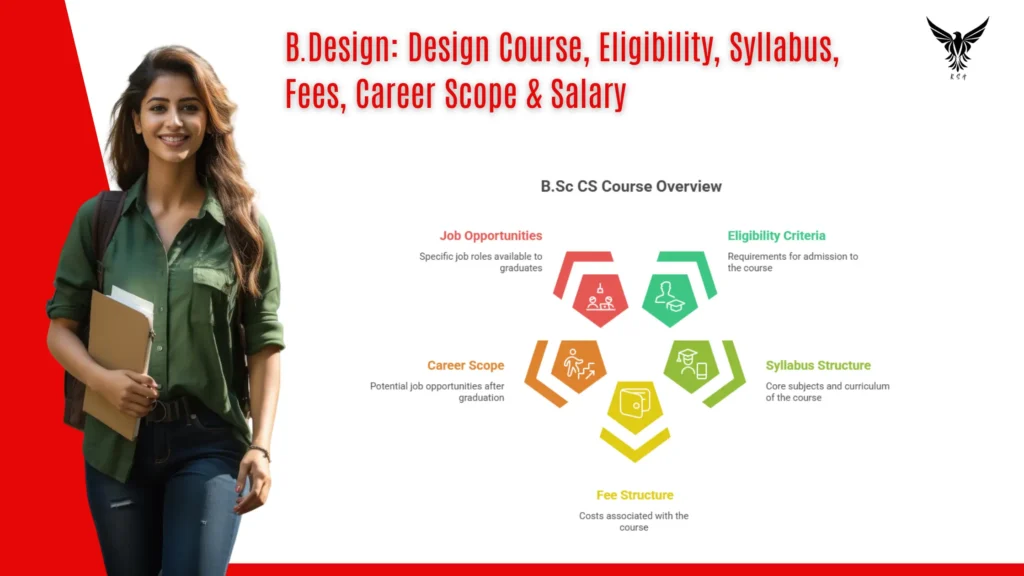
B.Design (Bachelor of Design). In today’s creative-driven economy, design has become one of the most powerful tools for communication, innovation, and problem-solving. From fashion and product design to user experience and visual communication, design professionals are shaping how people interact with brands, products, and technology. One of the most sought-after undergraduate programs in this field is B.Design (Bachelor of Design).
This detailed article provides a complete overview of B.Design, including course details, eligibility criteria, admission process, syllabus, specializations, fees, top colleges, career opportunities, salary, and future scope.
What is B.Design?
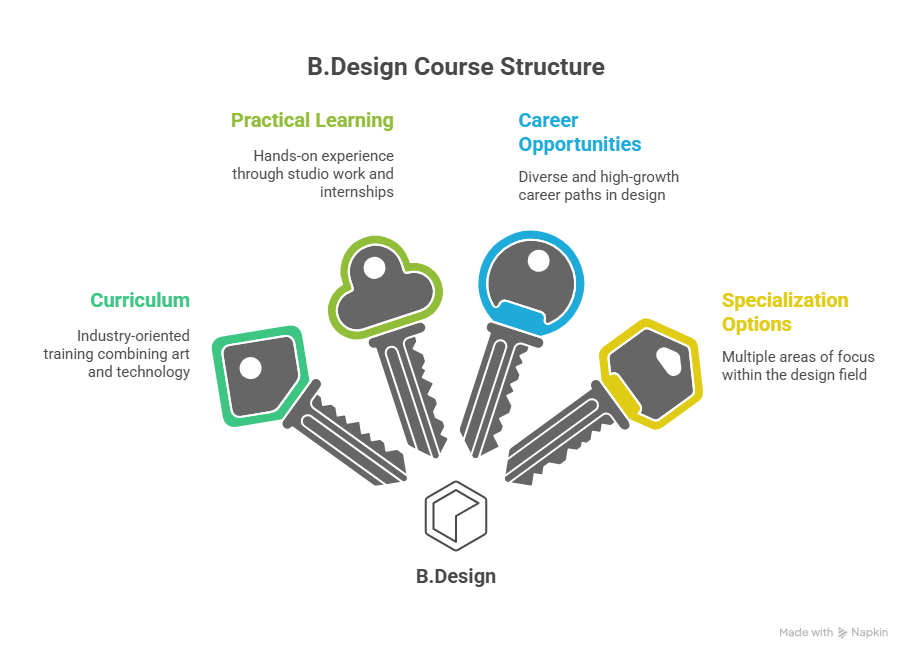
B.Design, also known as Bachelor of Design, is a 4-year undergraduate professional degree that focuses on creativity, innovation, and design thinking. The course combines artistic skills with technical knowledge and industry-oriented training to prepare students for careers in various design fields.
The B.Design program emphasizes practical learning, studio work, projects, internships, and portfolio development, making it an ideal choice for students with creative aptitude and visual thinking skills.
Why Choose B.Design?
Choosing B.Design can open doors to diverse and high-growth career opportunities. Here’s why the course is increasingly popular:
- High demand for creative professionals
- Multiple specialization options
- Industry-oriented curriculum
- Strong freelance and entrepreneurship opportunities
- Global career scope
- Blend of creativity and technology
With digital media and user-centered design gaining importance, B.Design graduates are in demand across industries.
B.Design Course Highlights
| Feature | Details |
|---|---|
| Course Name | B.Design |
| Full Form | Bachelor of Design |
| Course Level | Undergraduate |
| Duration | 4 Years (8 Semesters) |
| Eligibility | 10+2 from any stream |
| Admission Process | Entrance Exam / Merit |
| Average Fees | ₹1.5 – ₹4 lakh per year |
| Career Options | Designer, UX/UI Expert, Creative Director |
B.Design Eligibility Criteria
To pursue B.Design, candidates must meet the following eligibility requirements:
- Passed 10+2 from a recognized board
- Students from any stream (Science, Commerce, Arts) can apply
- Minimum marks usually range from 50% to 60%
- Some institutes require a valid score in design entrance exams
Creativity, imagination, and design aptitude are more important than academic background for B.Design.
B.Design Admission Process
Admission to B.Design is generally based on entrance exams and portfolio assessment.
Step 1: Entrance Exam
Common entrance exams include:
- NID DAT
- NIFT Entrance Exam
- UCEED
- CEED (for PG, but sometimes considered)
- University-level design tests
Step 2: Studio Test / Interview
Shortlisted candidates appear for:
- Design aptitude test
- Portfolio review
- Personal interview
Step 3: Final Selection
Final admission is based on:
- Entrance exam score
- Studio test performance
- Interview and portfolio
B.Design Specializations
One of the biggest advantages of B.Design is the wide range of specializations:
Popular B.Design Specializations
- Fashion Design
- Graphic Design
- Product Design
- Interior Design
- Industrial Design
- UX/UI Design
- Animation & Multimedia
- Textile Design
- Game Design
Students can choose a specialization based on their interests and career goals.
B.Design Syllabus and Subjects
The B.Design syllabus is structured to provide a strong foundation in design fundamentals along with specialization-specific subjects.
Core Subjects (First 2 Years)
- Design Fundamentals
- Drawing & Visualization
- Color Theory
- Design Thinking
- History of Design
- Materials & Processes
- Digital Design Tools
- Visual Communication
Specialization Subjects (Last 2 Years)
- UX Research & Interaction Design
- Fashion Illustration & Draping
- Product Prototyping
- Typography & Branding
- 3D Modeling & Animation
- Sustainable Design
- Design Management
- Industry Internship
- Major Design Project
The syllabus may vary slightly depending on the institution.
B.Design Fees Structure
The fees for B.Design depend on the type of institution:
| Institution Type | Average Annual Fees |
|---|---|
| Government Colleges | ₹1 – ₹2 lakh |
| Private Colleges | ₹2 – ₹4 lakh |
| Deemed Universities | ₹3 – ₹5 lakh |
Scholarships and financial aid are available for meritorious and economically weaker students.
Top Colleges Offering B.Design in India
Some of the top institutions offering B.Design include:
- National Institute of Design (NID)
- National Institute of Fashion Technology (NIFT)
- IITs (through UCEED)
- MIT Institute of Design
- Pearl Academy
- Srishti Institute of Art, Design & Technology
- Symbiosis Institute of Design
Admission to top colleges is highly competitive.
Skills Required for B.Design Students
To succeed in B.Design, students should develop the following skills:
- Creativity and innovation
- Visual thinking
- Problem-solving ability
- Communication skills
- Attention to detail
- Software proficiency (Adobe, Figma, etc.)
- Time management
Career Scope After B.Design
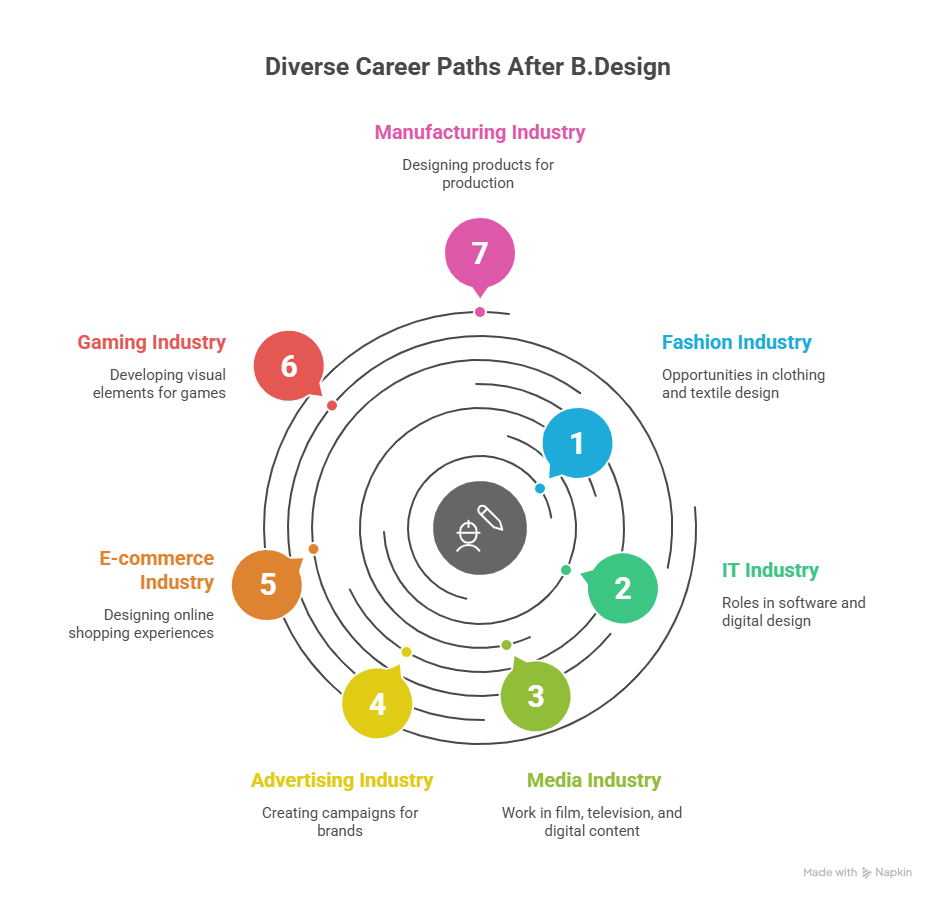
B.Design graduates can work in multiple industries including fashion, IT, media, advertising, e-commerce, gaming, and manufacturing.
Popular Job Roles After B.Design
- Graphic Designer
- UX/UI Designer
- Product Designer
- Fashion Designer
- Interior Designer
- Visual Designer
- Motion Graphics Artist
- Design Consultant
Salary After B.Design
Salary depends on skills, specialization, and experience.
| Experience Level | Average Salary |
|---|---|
| Fresher | ₹3 – ₹6 LPA |
| 2–5 Years | ₹6 – ₹12 LPA |
| Experienced Designers | ₹15 LPA and above |
Freelancers and entrepreneurs can earn significantly more based on projects and clients.
Higher Studies After B.Design
After completing B.Design, students can pursue higher education to enhance career prospects:
- M.Design (Master of Design)
- MBA in Design Management
- Specialized certification courses
- International design programs
B.Design vs BFA: Which is Better?
| Parameter | B.Design | BFA |
|---|---|---|
| Focus | Applied & Professional Design | Fine Arts |
| Industry Exposure | High | Moderate |
| Career Orientation | Commercial & Tech-based | Artistic |
| Salary Potential | Higher | Moderate |
Future Scope of B.Design
The future of B.Design is extremely promising due to:
- Growth of digital platforms
- Demand for UX/UI designers
- Expansion of e-commerce & startups
- Focus on user-centered design
- Global outsourcing opportunities
Design is no longer limited to aesthetics; it plays a crucial role in business and technology.
Advantages of Studying B.Design
- Industry-ready curriculum
- Strong portfolio development
- Global career opportunities
- Creative satisfaction
- High freelance potential
Challenges of B.Design
- Highly competitive field
- Requires continuous skill upgrade
- Subjective evaluation
- Demands creativity under deadlines
With passion and persistence, these challenges can be easily overcome.
Who Should Choose B.Design?
B.Design is ideal for students who:
- Are creative and imaginative
- Enjoy problem-solving through design
- Want a career in creative industries
- Are comfortable with technology and tools
Final Thoughts
B.Design is one of the most dynamic and future-oriented undergraduate courses for creative minds. It blends creativity, technology, and innovation, preparing students for exciting careers across industries. With the right specialization, skills, and portfolio, B.Design graduates can achieve professional success in India and globally.
If you have a passion for design and want to turn creativity into a career, B.Design is a powerful and rewarding choice.
B.Design vs BFA:
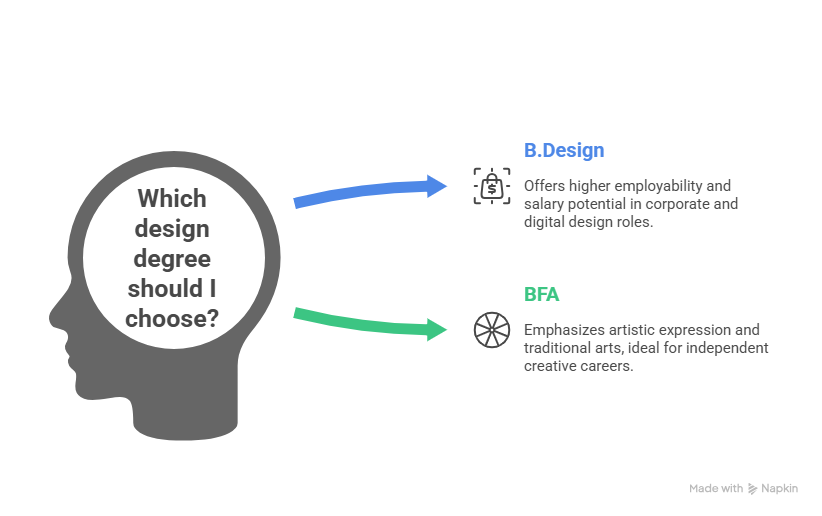
B.Design (Bachelor of Design) is an industry-oriented professional course focused on applied, digital, and technology-driven design fields like UX/UI, product, fashion, and graphic design, offering higher employability and salary potential. In contrast, BFA (Bachelor of Fine Arts) emphasizes artistic expression and traditional arts such as painting, sculpture, photography, and applied arts, making it ideal for students passionate about pure art, teaching, or independent creative careers. Choose B.Design for corporate and digital design roles, and BFA for fine arts and artistic freedom.
B.Design vs BFA – Quick Comparison Table
| Feature | B.Design | BFA |
|---|---|---|
| Full Form | Bachelor of Design | Bachelor of Fine Arts |
| Duration | 4 Years | 3–4 Years |
| Course Type | Professional / Industry-Oriented | Fine Arts / Artistic |
| Focus Area | Applied & Digital Design | Traditional & Creative Arts |
| Popular Fields | UX/UI, Product, Graphic, Fashion | Painting, Sculpture, Photography |
| Industry Exposure | High | Moderate |
| Software & Tools | Extensive Use | Limited Use |
| Career Scope | Corporate, Startups, Freelance | Independent Art, Teaching |
| Average Starting Salary | ₹3–6 LPA | ₹2–4 LPA |
| Best For | Industry-focused Designers | Pure Art & Creative Expression |
FAQs on B.Design
1. What is B.Design?
B.Design (Bachelor of Design) is a 4-year undergraduate professional degree that focuses on creativity, design thinking, and practical skills in various design fields such as fashion, UX/UI, product, and graphic design.
2. Who is eligible for B.Design?
Candidates who have passed 10+2 from any stream (Science, Commerce, or Arts) with at least 50–60% marks can apply for B.Design.
3. What is the duration of the B.Design course?
The duration of B.Design is 4 years, divided into 8 semesters.
4. Is an entrance exam required for B.Design admission?
Yes, most reputed institutes require entrance exams like NID DAT, NIFT, UCEED, or university-level design tests for B.Design admission.
5. What are the specializations available in B.Design?
Popular B.Design specializations include Fashion Design, Graphic Design, Product Design, Interior Design, UX/UI Design, Animation, and Textile Design.
6. What subjects are taught in B.Design?
Core subjects include Design Fundamentals, Drawing & Visualization, Color Theory, Design Thinking, Digital Design Tools, and specialization-specific studio projects.
7. What is the average fee for B.Design in India?
The average annual fee for B.Design ranges from ₹1.5 lakh to ₹4 lakh, depending on the institution.
8. What career options are available after B.Design?
After B.Design, graduates can work as Graphic Designers, UX/UI Designers, Product Designers, Fashion Designers, Interior Designers, or Design Consultants.
9. What is the salary after B.Design?
Freshers earn around ₹3–6 LPA, while experienced designers can earn ₹10–15 LPA or more, depending on skills and specialization.
10. Is B.Design better than BFA?
B.Design is more industry-oriented and professional, while BFA focuses on fine arts. B.Design generally offers better job opportunities and salary potential.
11. Can I do M.Design after B.Design?
Yes, B.Design graduates can pursue M.Design, MBA in Design Management, or other specialized postgraduate programs.
12. Is B.Design a good career choice in the future?
Yes, with growing demand in UX/UI, digital media, animation, and product design, B.Design has excellent future scope.
13. Can I do B.Design without drawing skills?
Basic drawing skills are helpful, but creativity, problem-solving, and willingness to learn design tools are more important for B.Design.
14. Does B.Design offer freelance opportunities?
Yes, B.Design graduates can work as freelancers, start their own studios, or take international projects.
15. Is B.Design suitable for international careers?
Yes, B.Design has strong global demand, especially in UX/UI design, animation, and product design roles.