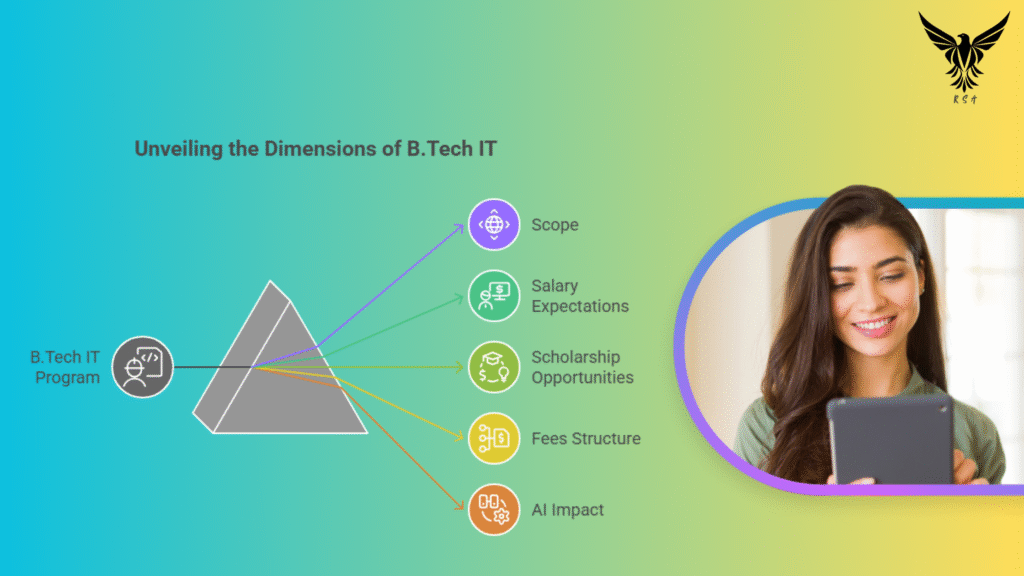

B.Tech IT 2026 This document provides a comprehensive overview of the Bachelor of Technology in Information Technology (B.Tech IT) program, specifically tailored for the 2026 batch. It delves into the scope of the program, potential salary expectations, available scholarship opportunities, typical fee structures, and the profound impact of Artificial Intelligence (AI) on the future of the IT field. This guide aims to equip prospective students with the necessary information to make informed decisions about pursuing a B.Tech IT degree.

Scope of B.Tech IT
The B.Tech IT program is designed to provide students with a strong foundation in computer science principles, coupled with specialized knowledge in information technology. The curriculum typically covers a wide range of subjects, including:
- Programming Languages: C, C++, Java, Python, JavaScript, and other relevant languages.
- Data Structures and Algorithms: Fundamental concepts for efficient data management and problem-solving.
- Database Management Systems: Design, implementation, and management of databases using systems like MySQL, Oracle, and NoSQL databases.
- Operating Systems: Understanding the principles and functionalities of operating systems like Windows, Linux, and macOS.
- Computer Networks: Networking concepts, protocols, and technologies for data communication.
- Software Engineering: Principles and practices for developing high-quality software.
- Web Development: Front-end and back-end technologies for building web applications.
- Cloud Computing: Concepts and technologies related to cloud platforms like AWS, Azure, and Google Cloud.
- Cybersecurity: Principles and practices for protecting computer systems and networks from cyber threats.
- Artificial Intelligence and Machine Learning: Introduction to AI concepts, machine learning algorithms, and their applications.
Graduates of B.Tech IT programs are well-prepared for a variety of roles in the IT industry, including:
- Software Developer: Designing, developing, and testing software applications.
- Web Developer: Building and maintaining websites and web applications.
- Database Administrator: Managing and maintaining databases.
- Network Engineer: Designing, implementing, and managing computer networks.
- System Analyst: Analyzing user needs and designing IT systems to meet those needs.
- Data Scientist: Analyzing large datasets to extract insights and build predictive models.
- Cybersecurity Analyst: Protecting computer systems and networks from cyber threats.
- Cloud Architect: Designing and implementing cloud-based solutions.
- IT Consultant: Providing IT advice and guidance to organizations. B.Tech IT 2026
Salary Expectations
Salary expectations for B.Tech IT graduates vary depending on factors such as:
- Skills and Expertise: Proficiency in in-demand technologies like AI, cloud computing, and cybersecurity can command higher salaries.
- Location: Salaries tend to be higher in metropolitan areas and tech hubs.
- Company Size and Type: Large multinational corporations and startups may offer different compensation packages.
- Academic Performance: Graduates with strong academic records and relevant internships may be more competitive in the job market.
As a general guideline, entry-level B.Tech IT graduates in India can expect to earn an average annual salary ranging from INR 3.5 LPA to INR 7 LPA. With experience and specialized skills, salaries can increase significantly, potentially reaching INR 15 LPA or more for experienced professionals. In developed countries like the United States, the United Kingdom, and Canada, entry-level salaries for B.Tech IT graduates can range from $60,000 to $90,000 per year. B.Tech IT 2026
Scholarship Opportunities
Numerous scholarship opportunities are available to students pursuing B.Tech IT degrees. These scholarships can help alleviate the financial burden of tuition fees and other expenses. Some common types of scholarships include:
- Merit-Based Scholarships: Awarded to students with excellent academic records.
- Need-Based Scholarships: Awarded to students from economically disadvantaged backgrounds.
- Government Scholarships: Offered by central and state governments to support higher education.
- Private Scholarships: Offered by private organizations, foundations, and companies.
- University Scholarships: Offered by universities to attract talented students.
Some popular scholarship programs for B.Tech students in India include:
- Central Sector Scheme of Scholarship for College and University Students: Offered by the Ministry of Education, Government of India.
- AICTE Scholarship Schemes: Offered by the All India Council for Technical Education (AICTE).
- State Government Scholarships: Offered by various state governments.
- Private Scholarships: Offered by organizations like the Tata Trusts, Reliance Foundation, and Aditya Birla Group.
Students are encouraged to research and apply for scholarships that they are eligible for. Websites like Buddy4Study, Scholarship.net, and the National Scholarship Portal can provide information on available scholarship opportunities. B.Tech IT 2026
Fees Structure
The fees structure for B.Tech IT programs varies depending on the type of institution (government or private), its location, and its reputation. Government-funded institutions typically have lower fees compared to private institutions.
In India, the annual tuition fees for B.Tech IT programs in government colleges can range from INR 20,000 to INR 1,00,000. In private colleges, the annual tuition fees can range from INR 1,00,000 to INR 5,00,000 or more.
In addition to tuition fees, students may also need to pay for other expenses such as:
- Hostel Fees: For students who choose to stay in university-provided accommodation.
- Mess Fees: For meals provided in the hostel mess.
- Examination Fees: For conducting semester-end examinations.
- Library Fees: For access to library resources.
- Other Miscellaneous Fees: For various administrative and academic services. B.Tech IT 2026
It is important for prospective students to carefully research the fees structure of different institutions and factor in all associated costs when making their decision.
Future with AI
Artificial Intelligence (AI) is rapidly transforming the IT industry, creating new opportunities and challenges for B.Tech IT graduates. AI is being integrated into various applications, including: B.Tech IT 2026
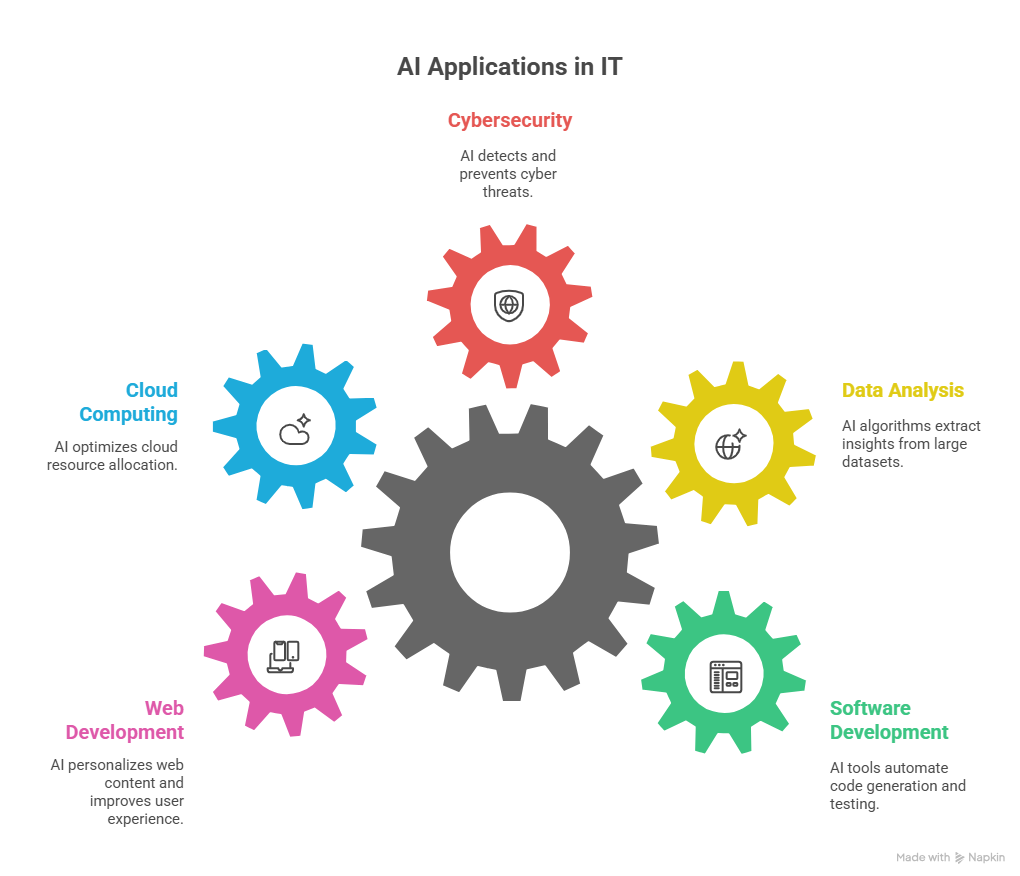
- Software Development: AI-powered tools are being used to automate code generation, testing, and debugging.
- Data Analysis: AI algorithms are being used to analyze large datasets and extract insights.
- Cybersecurity: AI is being used to detect and prevent cyber threats.
- Cloud Computing: AI is being used to optimize cloud resource allocation and management.
- Web Development: AI is being used to personalize web content and improve user experience. B.Tech IT 2026
B.Tech IT graduates with skills in AI and machine learning are in high demand. Some of the emerging roles in the AI field include:
- AI Engineer: Developing and deploying AI models.
- Machine Learning Engineer: Building and training machine learning algorithms.
- Data Scientist: Analyzing data and building predictive models.
- AI Researcher: Conducting research to advance the field of AI.
To prepare for the AI-driven future, B.Tech IT students should focus on developing skills in:
- Mathematics and Statistics: A strong foundation in mathematics and statistics is essential for understanding AI algorithms.
- Programming: Proficiency in programming languages like Python and R is crucial for implementing AI models.
- Machine Learning: Understanding machine learning algorithms and techniques.
- Deep Learning: Understanding deep learning architectures and frameworks.
- Data Visualization: Ability to visualize data and communicate insights effectively. B.Tech IT 2026
By acquiring these skills, B.Tech IT graduates can position themselves for success in the rapidly evolving AI landscape. The future of IT is inextricably linked to AI, and those who embrace this technology will be well-equipped to thrive in the years to come.
B.Tech IT 2026 – Frequently Asked Questions
Scope, Salary, Scholarships, Fees & the AI-Driven Future Explained
What is B.Tech in Information Technology?
B.Tech in Information Technology (IT) is a 4-year undergraduate engineering program focused on software development, data management, networking, cybersecurity, cloud computing, and emerging digital technologies.
Who should choose B.Tech IT in 2026?
Students interested in programming, problem-solving, digital systems, and future-ready technologies such as AI, data science, and cloud computing should consider B.Tech IT in 2026.
What is the scope of B.Tech IT in 2026?
The scope is excellent due to rapid digital transformation. Graduates can work as software engineers, data analysts, cloud architects, cybersecurity specialists, AI engineers, and IT consultants across global industries.
What salary can B.Tech IT graduates expect?
Entry-level salaries vary by skill and company. With strong technical expertise, graduates can secure competitive packages, and experienced professionals earn significantly higher salaries in India and abroad.
What are the fees for B.Tech IT?
Fees depend on the institution type. Government colleges usually have lower fees, while private colleges may charge higher tuition. Additional costs may include hostel, examination, and lab fees.
Are scholarships available for B.Tech IT students?
Yes. Scholarships are offered by government bodies, universities, private trusts, and corporations based on merit, financial need, category, or academic excellence.
How does AI impact B.Tech IT education?
AI is reshaping the IT curriculum through machine learning, automation, intelligent systems, and data analytics. Students gain exposure to real-world AI applications and industry-aligned skills.
Is B.Tech IT future-proof in the AI era?
Yes. B.Tech IT remains future-proof when combined with skills in AI, cloud computing, cybersecurity, and data science. Continuous learning ensures long-term career growth.
What higher study options are available after B.Tech IT?
Graduates can pursue M.Tech, MBA, MS abroad, data science programs, AI certifications, or competitive exams like GATE to expand career opportunities.