

CCNA: A Comprehensive Guide to Scope, Salary, Scholarships, Fees, and the AI-Driven Future
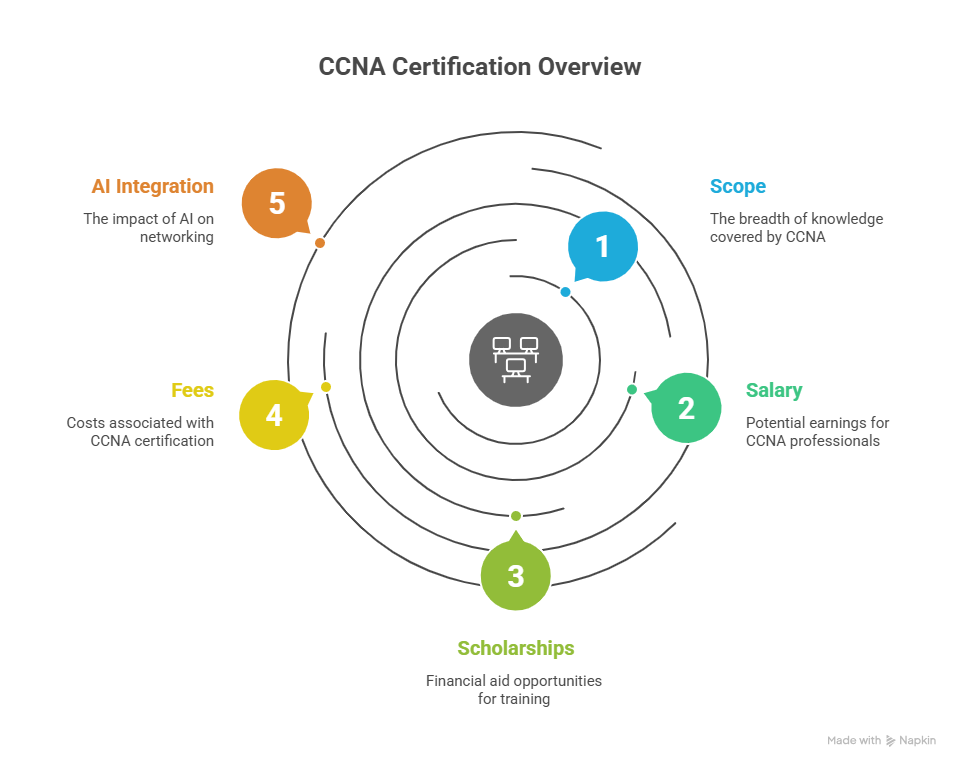
This document provides a comprehensive overview of the Cisco Certified Network Associate certification. It delves into the scope of the CCNA, potential salary expectations, available scholarship opportunities, associated fees, and how the field is evolving with the integration of Artificial Intelligence (AI). This guide aims to equip aspiring network professionals with the knowledge needed to make informed decisions about pursuing a certification and navigating the dynamic landscape of network engineering.
What is CCNA?
The Cisco Certified Network Associate is an entry-level information technology (IT) certification offered by Cisco Systems. It validates a professional’s fundamental knowledge and skills in networking. The CCNA covers a broad range of networking concepts, including:
- Network Fundamentals: Understanding network components, topology architectures, and models.
- Network Access: Configuring and troubleshooting VLANs, interswitch connectivity, and wireless LANs.
- IP Connectivity: Implementing IP addressing schemes, routing protocols (OSPF, EIGRP), and inter-VLAN routing.
- IP Services: Configuring and troubleshooting network services like DHCP, DNS, NAT, and QoS.
- Security Fundamentals: Understanding security concepts, implementing basic security measures, and identifying security threats.
- Automation and Programmability: Understanding network automation concepts and using tools like Python and APIs.
Scope of CCNA Certification
The CCNA certification opens doors to various career opportunities in the networking field. Some common roles for certified professionals include:
- Network Administrator: Responsible for the day-to-day operation and maintenance of a network. This includes tasks like configuring network devices, troubleshooting network issues, and monitoring network performance.
- Network Engineer: Designs, implements, and manages network infrastructure. This role often involves planning network upgrades, implementing new technologies, and ensuring network security.
- Network Technician: Provides technical support for network hardware and software. This includes tasks like installing network devices, troubleshooting connectivity issues, and providing user support.
- Help Desk Technician: Provides first-level support to users experiencing network-related issues. This involves troubleshooting basic network problems and escalating complex issues to higher-level support teams.
- System Administrator: Manages computer systems and servers, often including network-related tasks.
The scope of the CCNA extends beyond specific job titles. The knowledge and skills gained through the certification are valuable for anyone working with networks, regardless of their specific role. It provides a solid foundation for further specialization in areas like network security, cloud networking, or network automation.
Salary Expectations for CCNA Professionals
Salary expectations for CCNA-certified professionals vary depending on factors such as experience, location, job title, and company size. However, the CCNA certification generally leads to higher earning potential compared to individuals without the certification.
Entry-level positions, such as Network Technician or Help Desk Technician, may offer salaries in the range of $40,000 to $60,000 per year. With experience and further certifications, professionals in roles like Network Administrator or Network Engineer can earn salaries ranging from $60,000 to $100,000 or more per year. Senior-level network engineers and architects can command even higher salaries, often exceeding $120,000 per year.
It’s important to research salary ranges for specific job titles and locations to get a more accurate estimate of potential earnings. Websites like Glassdoor, Salary.com, and Payscale provide valuable salary data for various IT roles.
Scholarships and Financial Aid for CCNA Training
The cost of CCNA training and certification can be a barrier for some individuals. Fortunately, several scholarship and financial aid opportunities are available to help aspiring network professionals pursue their certification.
- Cisco Networking Academy: Cisco Networking Academy offers affordable training programs and resources for individuals interested in pursuing a CCNA certification. They also provide scholarships and financial aid to eligible students.
- Industry-Specific Scholarships: Organizations like the Information Technology Scholarship Foundation (ITSF) and the Women in Technology Scholarship (WITS) offer scholarships to students pursuing IT-related certifications, including the CCNA.
- Government Grants and Loans: Government agencies may offer grants and loans to individuals pursuing vocational training or higher education in IT fields.
- Employer Sponsorship: Some employers may offer tuition reimbursement or sponsorship programs for employees seeking to enhance their skills and knowledge through certifications
It’s crucial to research and apply for available scholarships and financial aid opportunities to reduce the financial burden of training and certification.
CCNA Exam Fees and Training Costs
The CCNA certification exam (200-301 CCNA) costs $300 USD. This fee covers the cost of taking the exam at a Pearson VUE testing center.
The cost of training can vary depending on the training provider and the format of the training. Self-study options, such as books and online courses, can be relatively inexpensive, ranging from $50 to $500. Instructor-led training courses, offered by authorized Cisco training partners, can be more expensive, ranging from $1,000 to $3,000 or more.
Consider the different training options available and choose the one that best fits your budget and learning style. Self-study can be a cost-effective option for motivated learners, while instructor-led training provides a more structured learning environment with expert guidance.
The AI-Driven Future of Networking and CCNA
Artificial Intelligence (AI) is rapidly transforming the networking landscape. AI-powered tools and technologies are being used to automate network management tasks, improve network security, and optimize network performance.
The CCNA certification is evolving to incorporate AI-related concepts and skills. The current curriculum includes topics like network automation and programmability, which are essential for working with AI-driven networking solutions.
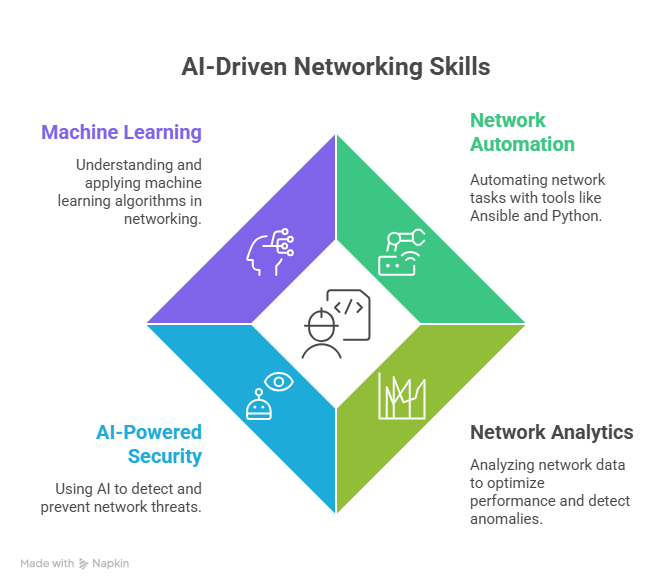
As AI continues to play a larger role in networking, -certified professionals will need to develop skills in areas such as:
- Network Automation: Using tools like Ansible and Python to automate network configuration and management tasks.
- Network Analytics: Analyzing network data to identify trends, detect anomalies, and optimize network performance.
- AI-Powered Security: Implementing AI-based security solutions to detect and prevent network threats.
- Machine Learning: Understanding machine learning algorithms and their applications in networking.
By embracing AI and developing the necessary skills, certified professionals can position themselves for success in the future of networking. The ability to work with AI-driven networking solutions will be a valuable asset in the years to come.
CCNA: A Comprehensive Guide – FAQs
What is the scope of CCNA certification?
CCNA provides strong career opportunities in networking, system administration, cybersecurity, and cloud technologies across global IT industries.
What salary can a CCNA-certified professional expect?
CCNA-certified professionals can earn competitive entry-level salaries, with higher growth potential as experience and skills increase.
Are scholarships available for CCNA?
Yes, Cisco and partner institutions offer scholarships, discounts, and financial aid programs for eligible students.
What are the CCNA course and exam fees?
CCNA fees vary by country and training provider. Students enrolled in Cisco Networking Academy may receive discounted exam fees.
How does AI impact the future of CCNA?
AI-driven networking increases demand for professionals skilled in automation, analytics, and intelligent network management.
Conclusion
The CCNA certification remains a valuable asset for aspiring network professionals. It provides a solid foundation in networking fundamentals and opens doors to various career opportunities. By understanding the scope of the , potential salary expectations, available scholarship opportunities, associated fees, and the evolving role of AI in networking, individuals can make informed decisions about pursuing this certification and building a successful career in the field. As the networking landscape continues to evolve, continuous learning and adaptation will be crucial for staying ahead of the curve and maximizing career potential.