
- 🔍 What is PhD in Physics 2026?
- ⏳ Duration of PhD in Physics 2026
- 🎓 Eligibility Criteria for PhD in Physics 2026
- ✔ Academic Qualification
- 🏛 Admission Process for PhD in Physics 2026
- 1. Entrance Exam
- 2. Interview / Viva
- 3. Final Selection
- 📘 PhD in Physics 2026 Syllabus & Research Areas
- Coursework Topics
- Popular Research Areas
- 💰 PhD in Physics 2026 Fees Structure
- 🏫 Top Colleges for PhD in Physics 2026
- 🧪 Why Choose PhD in Physics 2026?
- 🚀 Career Scope After PhD in Physics 2026
- Job Roles
- Top Recruiters
- 💸 Salary After PhD in Physics 2026
- 🎯 Conclusion
- 20 FAQs for PhD in Physics 2026
- 1. What is PhD in Physics 2026?
- 2. What is the duration of PhD in Physics 2026?
- 3. What is the eligibility for PhD in Physics 2026?
- 4. Is entrance exam compulsory for PhD in Physics 2026?
- 5. What is the admission process for PhD in Physics 2026?
- 6. What is the average fee for PhD in Physics 2026?
- 7. Do students get stipend during PhD in Physics 2026?
- 8. What subjects are covered in PhD in Physics coursework?
- 9. What research areas are available in PhD in Physics 2026?
- 10. What skills do students gain during a PhD in Physics?
- 11. What jobs can I get after PhD in Physics 2026?
- 12. Which companies and organizations hire PhD Physics graduates?
- 13. Can I work abroad after completing PhD in Physics in India?
- 14. What is the salary after PhD in Physics 2026?
- 15. Is PhD in Physics difficult?
- 16. Is a research proposal required for admission?
- 17. Can I pursue PhD in Physics 2026 without NET or JRF?
- 18. What is the role of a PhD supervisor?
- 19. Can I change my research topic during PhD?
- 20. Is teaching experience required during PhD?
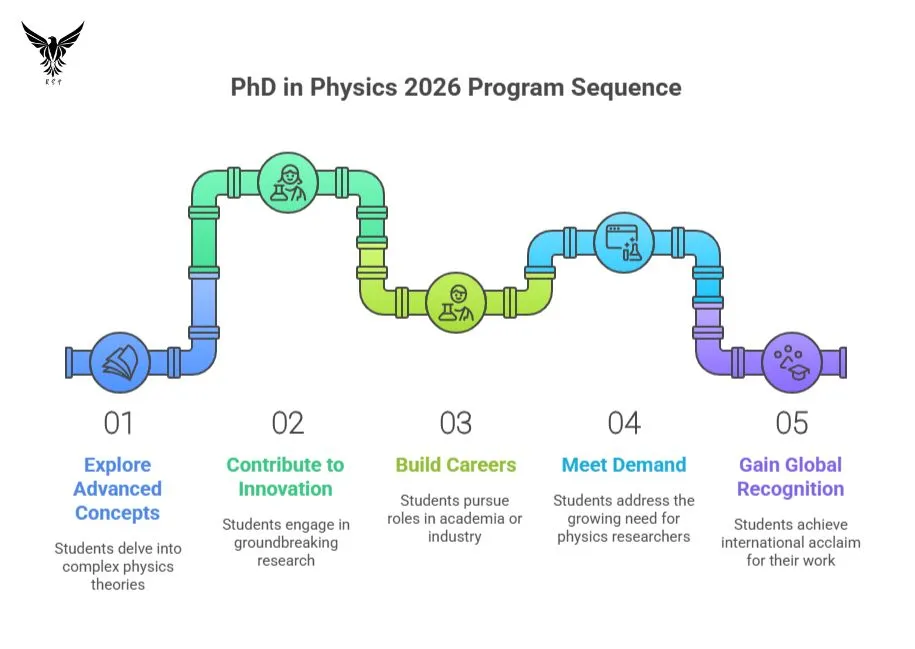
A Doctorate of Philosophy – PhD in Physics 2026 is one of the highest academic research programs designed for students who want to explore advanced concepts in physics, contribute to scientific innovation, and build careers in academia, research, or high-tech industries. As science and technology continue to evolve rapidly, the demand for skilled physics researchers is increasing, making PhD in Physics 2026 a great opportunity for future scientists and professionals seeking deep knowledge and global recognition.
This article provides a complete guide on eligibility, admission process, syllabus, fees, top colleges, research areas, and career scope for the PhD in Physics 2026 program.
🔍 What is PhD in Physics 2026?
A PhD in Physics 2026 is a research-intensive doctoral program focused on advanced studies in theoretical, experimental, and applied physics. The course encourages students to investigate complex scientific questions, conduct experiments, publish research papers, and work under expert supervision.
It aims to develop deep scientific understanding and prepare students for impactful roles in research institutes, universities, space agencies, and high-tech industries.
⏳ Duration of PhD in Physics 2026
- Minimum Duration: 3 years
- Maximum Duration: 6 years
- Nature: Research-based with coursework during the initial phase
Students spend the first year completing coursework, followed by intensive research, thesis development, and project submission.
🎓 Eligibility Criteria for PhD in Physics 2026
To apply for PhD in Physics 2026, candidates must meet the following criteria:
✔ Academic Qualification
- Master’s degree in Physics, Applied Physics, or relevant subject
- Minimum 55% marks (50% for reserved categories)
- Students with M.Phil in Physics can also apply
- Candidates with CSIR-NET, UGC-NET, GATE, JEST, or INSPIRE qualifiers are given preference
🏛 Admission Process for PhD in Physics 2026
Admission generally follows a multi-step procedure:
1. Entrance Exam
Most universities conduct entrance exams. Common exams include:
- UGC-NET / CSIR-NET
- GATE
- JEST
- University-specific tests
2. Interview / Viva
Shortlisted candidates attend a research interview, where they present interests, proposals, or previous research experience.
3. Final Selection
Based on:
- Entrance score
- Academic profile
- Research proposal
- Interview performance
📘 PhD in Physics 2026 Syllabus & Research Areas
The syllabus includes coursework and research components. Common subjects include:
Coursework Topics
- Advanced Quantum Mechanics
- Statistical Physics
- Electrodynamics
- Mathematical Physics
- Research Methodology
- Computational Physics
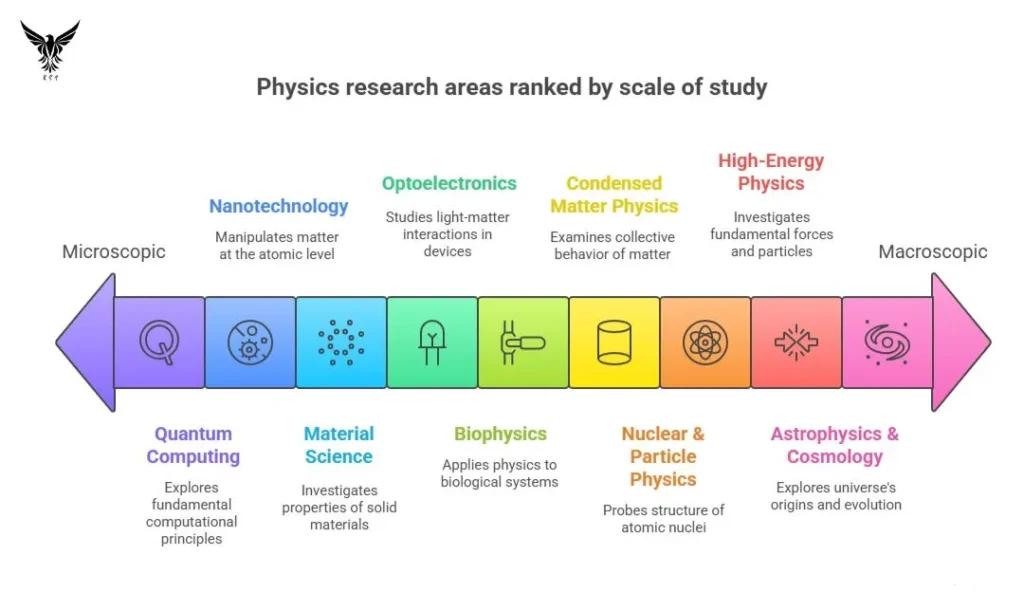
Popular Research Areas
- Condensed Matter Physics
- Nuclear & Particle Physics
- Astrophysics & Cosmology
- Laser and Plasma Physics
- High-Energy Physics
- Quantum Computing
- Material Science
- Nanotechnology
- Optoelectronics
- Biophysics
Students work under a supervisor and complete a PhD thesis that contributes new knowledge to the field.
💰 PhD in Physics 2026 Fees Structure
Fees vary between government and private universities.
| Type of Institution | Annual Fees Range |
|---|---|
| Government Universities | ₹10,000 – ₹50,000 |
| Central Universities | ₹20,000 – ₹60,000 |
| IITs / NITs / IISERs | ₹50,000 – ₹1,20,000 |
| Private Universities | ₹80,000 – ₹2,00,000 |
Most students receive stipends through NET-JRF, GATE, INSPIRE or university fellowships (₹31,000 – ₹35,000/month).
🏫 Top Colleges for PhD in Physics 2026
- IIT Bombay
- IIT Delhi
- IIT Madras
- IIT Kanpur
- IISc Bangalore
- IISERs (Pune, Mohali, Kolkata, Bhopal, TVM)
- TIFR (Mumbai)
- Delhi University
- Banaras Hindu University (BHU)
- Jawaharlal Nehru University (JNU)
- BITS Pilani
- Central Universities (CU’s)
These institutes are renowned for research excellence and global collaborations.
🧪 Why Choose PhD in Physics 2026?
✔ Opportunity to contribute new scientific knowledge
✔ High demand in research, teaching, and high-tech industries
✔ Attractive research fellowships
✔ Access to world-class labs and equipment
✔ Ability to work in national & international scientific organizations
✔ Career opportunities in space, defence, healthcare, and technology sectors
A PhD in Physics 2026 opens the door to a respectable, impactful, and highly rewarding career.
🚀 Career Scope After PhD in Physics 2026
PhD holders are highly valued across industries and research institutes.
Job Roles
- Research Scientist
- Physicist
- University Professor
- Space Scientist
- Particle Physicist
- Astronomer / Astrophysicist
- Nanotechnology Researcher
- R&D Engineer
- Quantum Computing Researcher
- Scientific Officer
Top Recruiters
- ISRO
- DRDO
- BARC
- CSIR Laboratories
- IISc / IITs / Research Institutes
- NASA (for international collaborations)
- Semiconductor & Electronics Companies
- Medical Imaging & Healthcare Technology Firms
💸 Salary After PhD in Physics 2026
- Research Fellow Stipend: ₹31,000 – ₹35,000 per month
- Assistant Professor: ₹6 LPA – ₹12 LPA
- Research Scientist: ₹7 LPA – ₹20 LPA
- International Research Roles: Can reach ₹40 LPA+
Salary varies depending on experience, research specialization, and workplace.
🎯 Conclusion
A PhD in Physics 2026 is an excellent choice for students passionate about understanding the universe, exploring scientific mysteries, and contributing to innovative research. With strong career prospects, global demand, research opportunities, and financial support through fellowships, the program offers both intellectual satisfaction and professional growth. Whether your goal is to become a scientist, professor, or researcher, this PhD program opens doors to a meaningful and impactful career.
20 FAQs for PhD in Physics 2026
1. What is PhD in Physics 2026?
PhD in Physics 2026 is a research-based doctoral program focused on advanced physics concepts, experiments, and scientific innovation.
2. What is the duration of PhD in Physics 2026?
The duration ranges from 3 to 6 years, depending on research progress and university guidelines.
3. What is the eligibility for PhD in Physics 2026?
You need a Master’s degree in Physics or a related field with at least 55% marks. NET/JRF, GATE, or JEST qualifiers get preference.
4. Is entrance exam compulsory for PhD in Physics 2026?
Yes. Most universities require UGC-NET, CSIR-NET, JEST, GATE, or university-based entrance exams.
5. What is the admission process for PhD in Physics 2026?
It includes an entrance exam, interview/viva, research proposal evaluation, and academic performance review.
6. What is the average fee for PhD in Physics 2026?
Fees range from ₹10,000 to ₹2,00,000 per year, depending on the institution.
7. Do students get stipend during PhD in Physics 2026?
Yes. Qualified candidates receive fellowships like JRF/SRF, GATE, INSPIRE, with stipends of ₹31,000–₹35,000 per month.
8. What subjects are covered in PhD in Physics coursework?
Advanced Quantum Mechanics, Electrodynamics, Statistical Physics, Computational Physics, and Research Methodology.
9. What research areas are available in PhD in Physics 2026?
Astrophysics, Particle Physics, Quantum Computing, Condensed Matter, Laser Physics, Nanotechnology, Material Science, and more.
10. What skills do students gain during a PhD in Physics?
Analytical thinking, data analysis, mathematical modeling, scientific writing, coding, and advanced laboratory skills.
11. What jobs can I get after PhD in Physics 2026?
You can become a Research Scientist, Physicist, Assistant Professor, Space Scientist, R&D Engineer, or Quantum Researcher.
12. Which companies and organizations hire PhD Physics graduates?
ISRO, DRDO, BARC, CSIR Labs, NASA (collaborations), Semiconductor companies, Universities, and Research Institutes.
13. Can I work abroad after completing PhD in Physics in India?
Yes. PhD graduates can work in international labs, universities, NASA collaborations, and tech industries.
14. What is the salary after PhD in Physics 2026?
Salary ranges from ₹6 LPA to ₹20 LPA in India and can exceed ₹40 LPA in international roles.
15. Is PhD in Physics difficult?
Yes, it is challenging, but with passion for research and curiosity about science, it becomes rewarding.
16. Is a research proposal required for admission?
Some universities require a preliminary proposal during the interview, while others ask for it after admission.
17. Can I pursue PhD in Physics 2026 without NET or JRF?
Yes. Many private and state universities conduct their own entrance exams for admission.
18. What is the role of a PhD supervisor?
A supervisor guides research, helps refine your thesis, publishes work with you, and ensures scientific accuracy.
19. Can I change my research topic during PhD?
Usually yes, within the first year, but only with approval from your supervisor and research committee.
20. Is teaching experience required during PhD?
Many universities encourage students to take part in teaching assistantships, but it is not always mandatory.