
Mastering the PMP® Exam: A Comprehensive Guide to Preparation Training
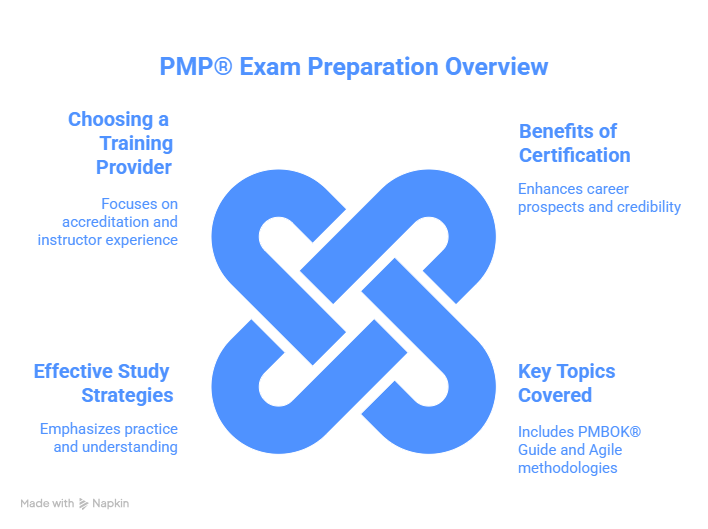
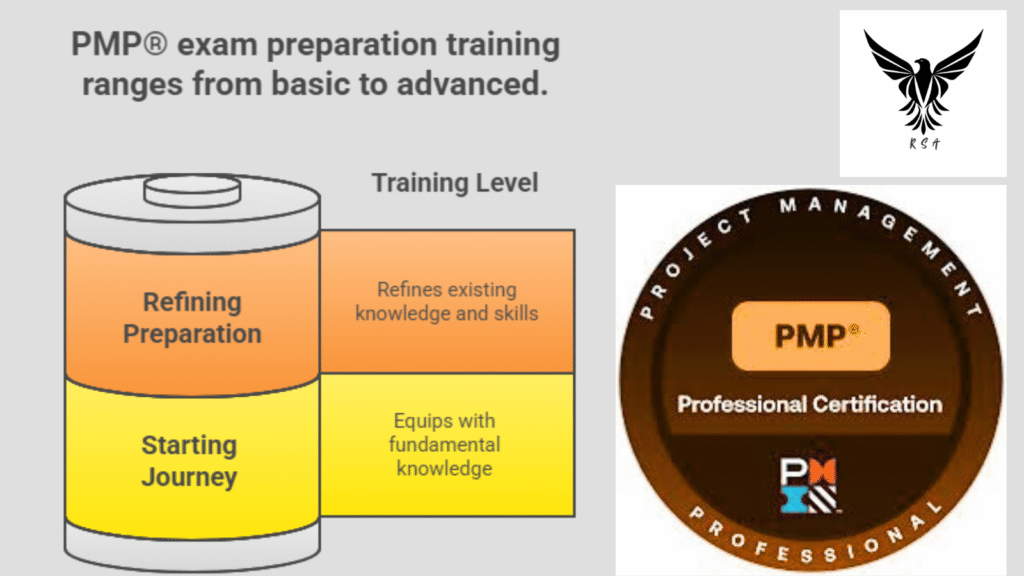
This blog post provides a comprehensive overview of the Project Management Professional (PMP)® exam preparation training course. It delves into the benefits of such a course, the key topics covered, effective study strategies, and tips for selecting the right training provider. Whether you’re just starting your PMP® journey or looking to refine your preparation, this guide will equip you with the knowledge and resources needed to succeed.Project Management Professional (PMP)®
Why Invest in a PMP® Exam Preparation Training Course?
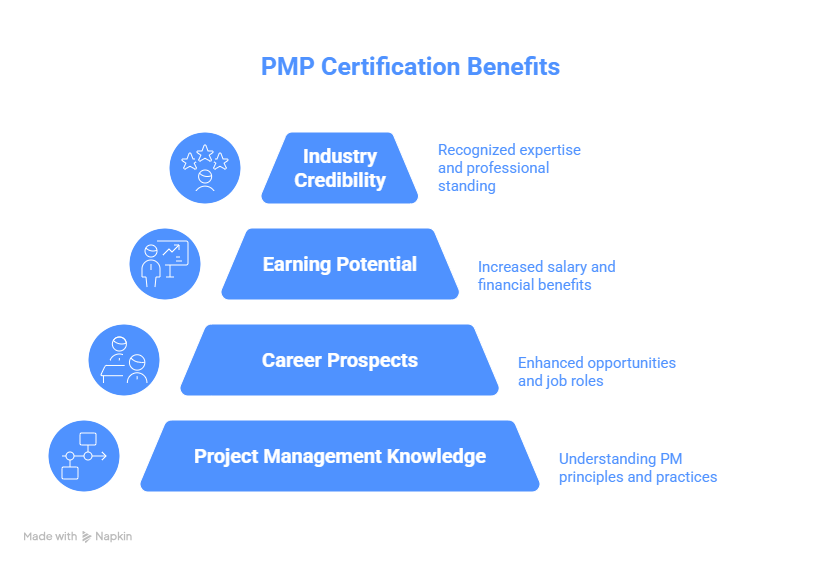
The PMP® certification is a globally recognized credential that validates your competence in project management. Earning this certification can significantly boost your career prospects, increase your earning potential, and enhance your credibility within the industry. However, the PMP® exam is notoriously challenging, requiring a thorough understanding of project management principles and practices as outlined in the Project Management Body of Knowledge (PMBOK®) Guide.
A PMP® exam preparation training course offers several key advantages:Project Management Professional (PMP)®
- Structured Learning: A well-designed course provides a structured learning path, breaking down complex concepts into manageable modules. This helps you stay organized and focused throughout your preparation.
- Expert Guidance: Experienced instructors, often PMP® certified themselves, provide expert guidance and insights into the exam content. They can clarify difficult concepts, answer your questions, and offer valuable tips and strategies.
- Comprehensive Coverage: A good training course covers all the essential topics outlined in the PMBOK® Guide, ensuring you have a solid understanding of each knowledge area and process group.
- Practice Exams and Mock Tests: These are crucial for assessing your progress and identifying areas where you need to improve. They simulate the actual exam environment, helping you build confidence and manage your time effectively.
- Networking Opportunities: Training courses often provide opportunities to connect with other aspiring PMPs, allowing you to share experiences, exchange study tips, and build a supportive network.Project Management Professional (PMP)®
- Meeting the Eligibility Requirements: PMI requires 35 hours of project management education/training or CAPM® Certification to be eligible for the PMP® exam. A PMP® exam preparation training course fulfills this requirement.
Key Topics Covered in a PMP® Exam Preparation Training Course
A comprehensive PMP® exam preparation training course should cover the following key topics:
- Introduction to Project Management: This module introduces the fundamental concepts of project management, including project life cycles, organizational structures, and the role of the project manager.Project Management Professional (PMP)®
- The PMBOK® Guide: This is the cornerstone of the PMP® exam. The course will delve into the five process groups (Initiating, Planning, Executing, Monitoring & Controlling, and Closing) and the ten knowledge areas (Integration, Scope, Schedule, Cost, Quality, Resource, Communications, Risk, Procurement, and Stakeholder Management).
- Project Integration Management: This knowledge area focuses on coordinating all aspects of the project, including developing the project charter, creating the project management plan, and managing project work.
- Project Scope Management: This covers defining and controlling the project scope, including collecting requirements, defining the scope, creating the work breakdown structure (WBS), and validating and controlling the scope.
- Project Schedule Management: This focuses on planning and managing the project schedule, including defining activities, sequencing activities, estimating activity durations, developing the schedule, and controlling the schedule.
- Project Cost Management: This covers planning and managing the project budget, including estimating costs, determining the budget, and controlling costs.Project Management Professional (PMP)®
- Project Quality Management: This focuses on ensuring that the project meets the required quality standards, including planning quality management, performing quality assurance, and controlling quality.
- Project Resource Management: This covers planning and managing the project resources, including estimating resource needs, acquiring resources, developing the team, managing the team, and controlling resources.
- Project Communications Management: This focuses on planning and managing project communications, including planning communications management, managing communications, and controlling communications.Project Management Professional (PMP)®
- Project Risk Management: This covers identifying, analyzing, and responding to project risks, including planning risk management, identifying risks, performing qualitative risk analysis, performing quantitative risk analysis, planning risk responses, and controlling risks.
- Project Procurement Management: This focuses on acquiring goods and services from outside the project team, including planning procurement management, conducting procurements, controlling procurements, and closing procurements.
- Project Stakeholder Management: This covers identifying and managing project stakeholders, including identifying stakeholders, planning stakeholder engagement, managing stakeholder engagement, and controlling stakeholder engagement.
- Agile Project Management: The PMP® exam now includes a significant portion of questions related to Agile methodologies. The course should cover Agile principles, frameworks (such as Scrum and Kanban), and techniques.Project Management Professional (PMP)®
- PMI Code of Ethics and Professional Conduct: Understanding and adhering to the PMI Code of Ethics is crucial for PMP® certified professionals. The course will cover the key principles and guidelines outlined in the code.
Effective Study Strategies for the PMP® Exam
While a training course provides a solid foundation, effective study strategies are essential for success. Here are some tips:
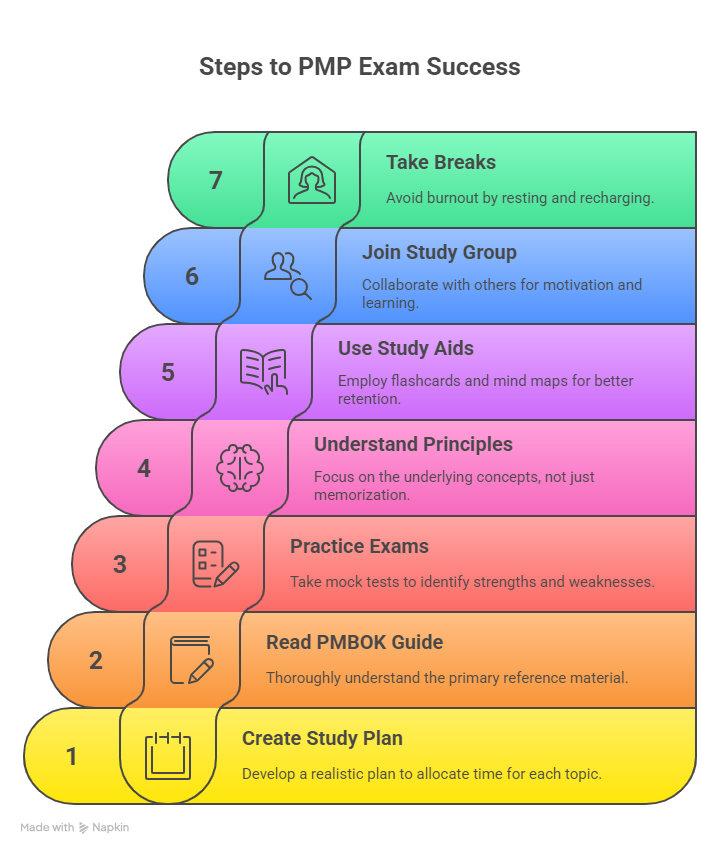
- Create a Study Plan: Develop a realistic study plan that allocates sufficient time for each topic. Break down the material into smaller, manageable chunks.Project Management Professional (PMP)®
- Read the PMBOK® Guide Thoroughly: The PMBOK® Guide is the primary reference for the PMP® exam. Read it carefully and make sure you understand the key concepts and processes.Project Management Professional (PMP)®
- Practice, Practice, Practice: Take as many practice exams and mock tests as possible. This will help you identify your strengths and weaknesses and get familiar with the exam format.
- Understand the “Why” Behind the “What”: Don’t just memorize the processes and formulas. Focus on understanding the underlying principles and how they apply in real-world scenarios.Project Management Professional (PMP)®
- Use Flashcards and Other Study Aids: Flashcards can be helpful for memorizing key terms and definitions. Consider using other study aids, such as mind maps and concept diagrams.
- Join a Study Group: Studying with others can be a great way to stay motivated and learn from each other.
- Take Breaks and Get Enough Rest: Avoid burnout by taking regular breaks and getting enough sleep.Project Management Professional (PMP)®
PMP® Exam Pattern 2026
The updated PMP exam follows:
Exam Format
- Total Questions: 180
- Question Type: MCQ, Drag-and-Drop, Hotspot & Situational
- Duration: 230 minutes
- Domains Covered:
- People (42%)
- Process (50%)
- Business Environment (8%)
Question Types
- Agile/Hybrid scenarios
- Risk management cases
- Leadership & conflict resolution
- Stakeholder engagement strategies
Keywords: PMP exam format 2026, PMP question pattern, PMI exam syllabus
Choosing the Right PMP® Exam Preparation Training Provider
Selecting the right training provider is crucial for a successful PMP® exam preparation. Consider the following factors:
- Accreditation: Ensure the training provider is an Authorized Training Partner (ATP) of PMI. This guarantees that the course meets PMI’s quality standards and provides the required 35 contact hours.
- Instructor Experience: Look for instructors who are PMP® certified and have extensive experience in project management.
- Course Content: Review the course syllabus to ensure it covers all the essential topics outlined in the PMBOK® Guide and includes Agile methodologies.
- Learning Format: Choose a learning format that suits your needs and preferences, such as online, in-person, or blended learning.Project Management Professional (PMP)®
- Practice Exams and Mock Tests: Make sure the course includes a sufficient number of practice exams and mock tests that simulate the actual exam environment.
- Cost: Compare the cost of different training providers and choose one that fits your budget.
- Reviews and Testimonials: Read reviews and testimonials from previous students to get an idea of the quality of the training.
Why Choose PMP® Exam Preparation Training Course 2026?
The 2026 PMP training course is designed to meet the evolving needs of modern project environments, including hybrid, agile, and predictive methodologies.
Key Features
- 35 Contact Hours / PDUs (Mandatory for PMP exam)
- PMI-approved learning materials
- Updated training aligned with PMBOK® 7th Edition
- Scenario-based learning, case studies & mock tests
- Access to digital resources and simulation exams
- Practical tools & templates for project management
Keywords: PMP training 2026, PMP exam preparation course, PMBOK 7th edition training
Conclusion
The PMP® certification is a valuable asset for any project management professional. A PMP® exam preparation training course can significantly increase your chances of success by providing structured learning, expert guidance, and comprehensive coverage of the exam content. By choosing the right training provider and adopting effective study strategies, you can confidently prepare for the PMP® exam and achieve your certification goals. Good luck!